How to make windows look bigger with curtains and shades
Learn how to make your windows look bigger with these designer tricks! Learn how to choose the right shades and curtains in this guide.
Do you have a small, off-center or awkward shaped window that you cannot figure out what to do with? In this post you will learn my tried and true tricks to make your window appear larger, and how to choose the well suited window treatments every time (without spending a fortune!)
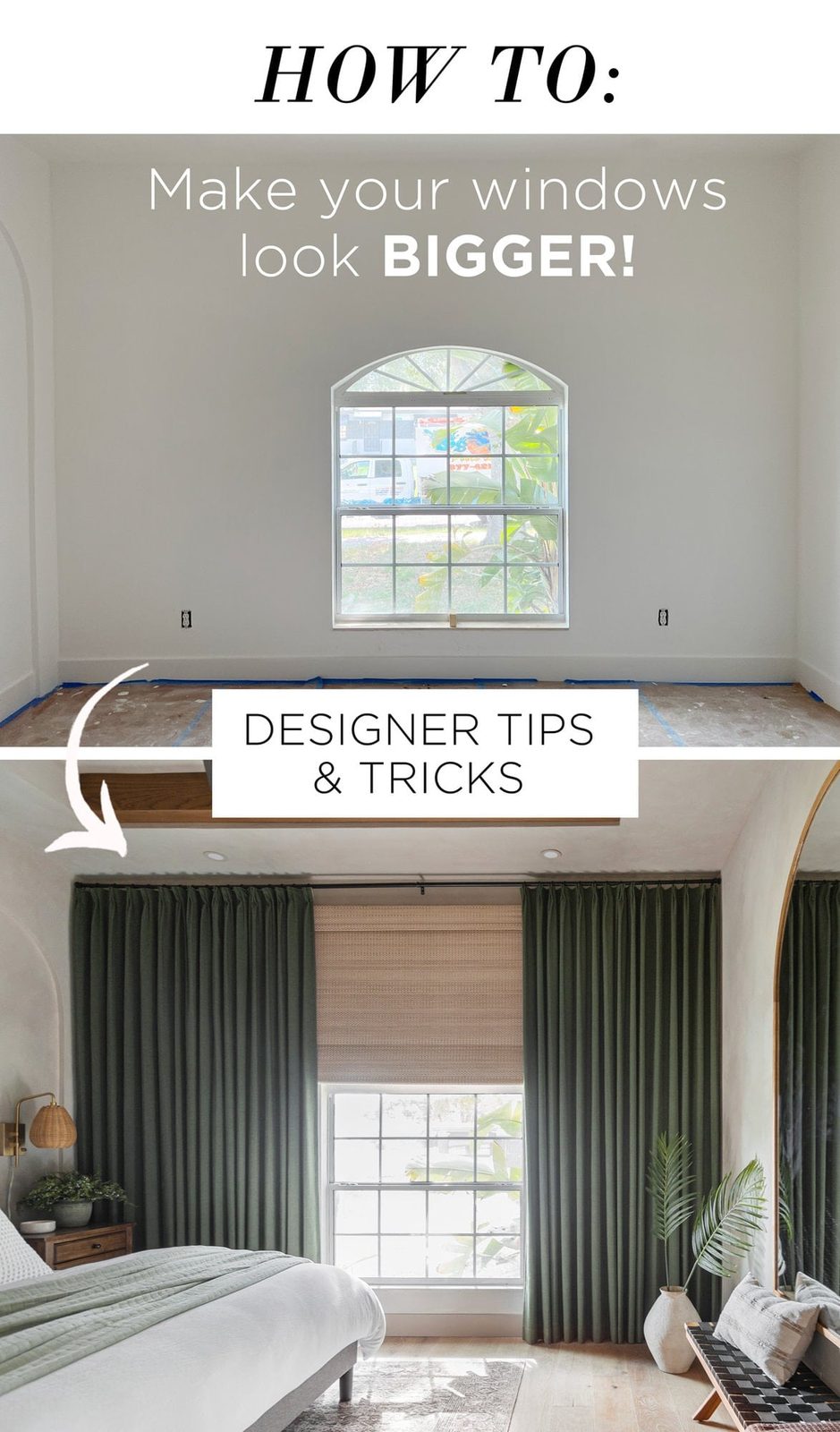
Before: Low and off-center window
You may remember how this odd window looked originally in our Modern Mediterranean bedroom…
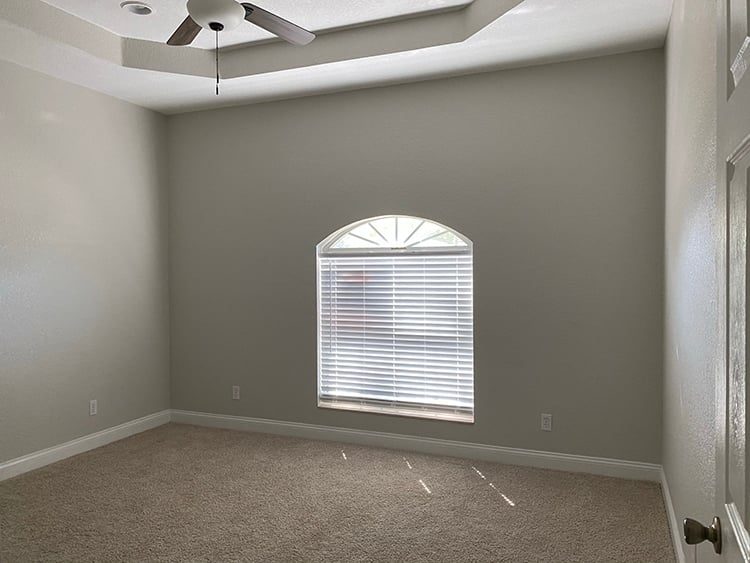
There were a few challenges that had to be addressed:
- Too low on the wall
- Off-center
- Arched top that allowed light in
The Solution
The best way to make a window appear taller and block the light from the arch is unfussy: outside-mount blackout shades. To help disguise the off-center position and make the window look wider, tall and wide curtains are the way to go.
Choosing window shades
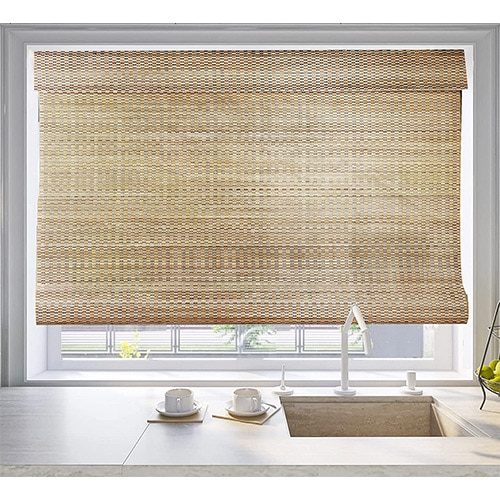
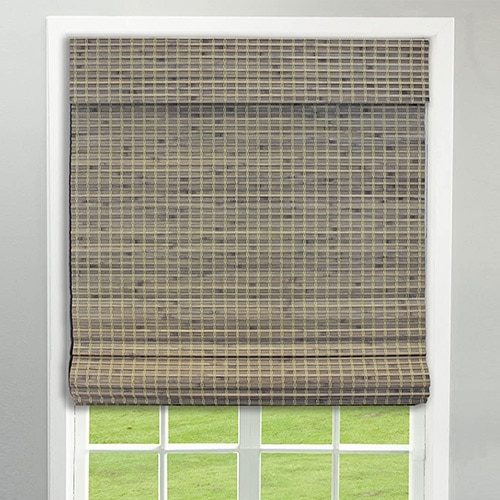
You could use any style of blinds or shades, but I personally prefer the look and functionality of cordless roman shades. I wanted a textured, organic feel for this Mediterranean style room, so I opted for these woven bamboo shades (in Pattern 1):
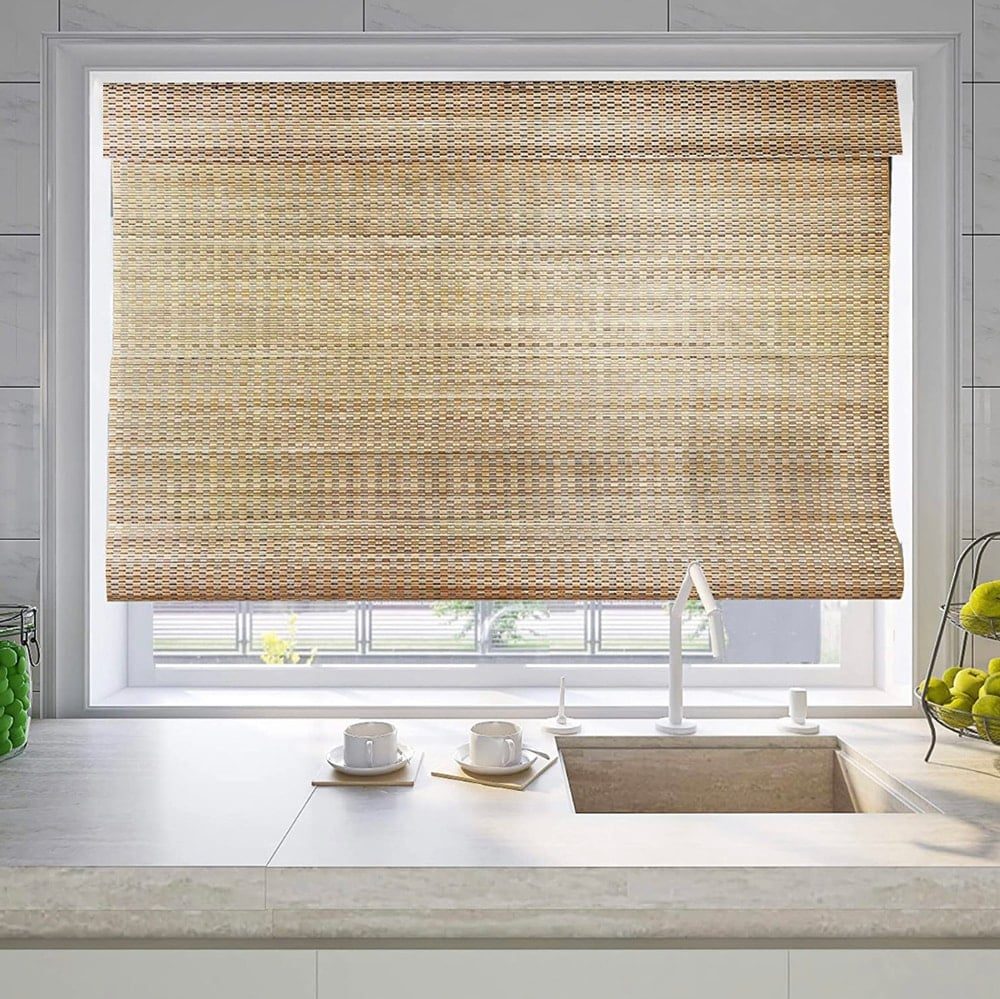
I landed on these after scouring Amazon for the best price on custom cordless, woven shades with a blackout liner option (and positive reviews with customer photos!) Customizable shades are key, as you will need to order them in a specific size to fit your window.
What size shade do I need?
In order to give the illusion of a taller window, you will want the height to match the distance from the bottom of your window to within ~a foot from your ceiling (for 8-9' ceilings). The shade should be mounted just below the location of your curtain rod, which is typically a max of ~5-8″ from your ceiling (unless they are very tall ceilings).
To determine the width, add ~5″ to each side of the window for sufficient overlap, so the shade should be ~10″ wider than your window.

For reference, our window measured 51″w x 62″h, and I ordered a 61″w x 100″h shade. Our ceilings are 9'4″, and we mounted the shade 7″ below the ceiling.

Look at the difference—you'd never know there was an awkwardly low window there! The key to this is effect is to use a blackout liner to block the light so you do not see anything underneath. The other customization options (cordless vs corded, fabric vs woven, color and pattern) are a matter of personal preference. I just find cordless cleaner and easier to use, and you can never go wrong with textured woven materials.
Choosing curtains
There are a lot more options out there when it comes to curtains. Here are the decisions to consider, and my recommendation for each:
Curtain header style
For a designer look, choose a pinch pleat header style. I avoid rod pocket, back tab, tab top and tie top as they do not open and close as easily, and I grommet rings tend to cheapen the look of curtains.
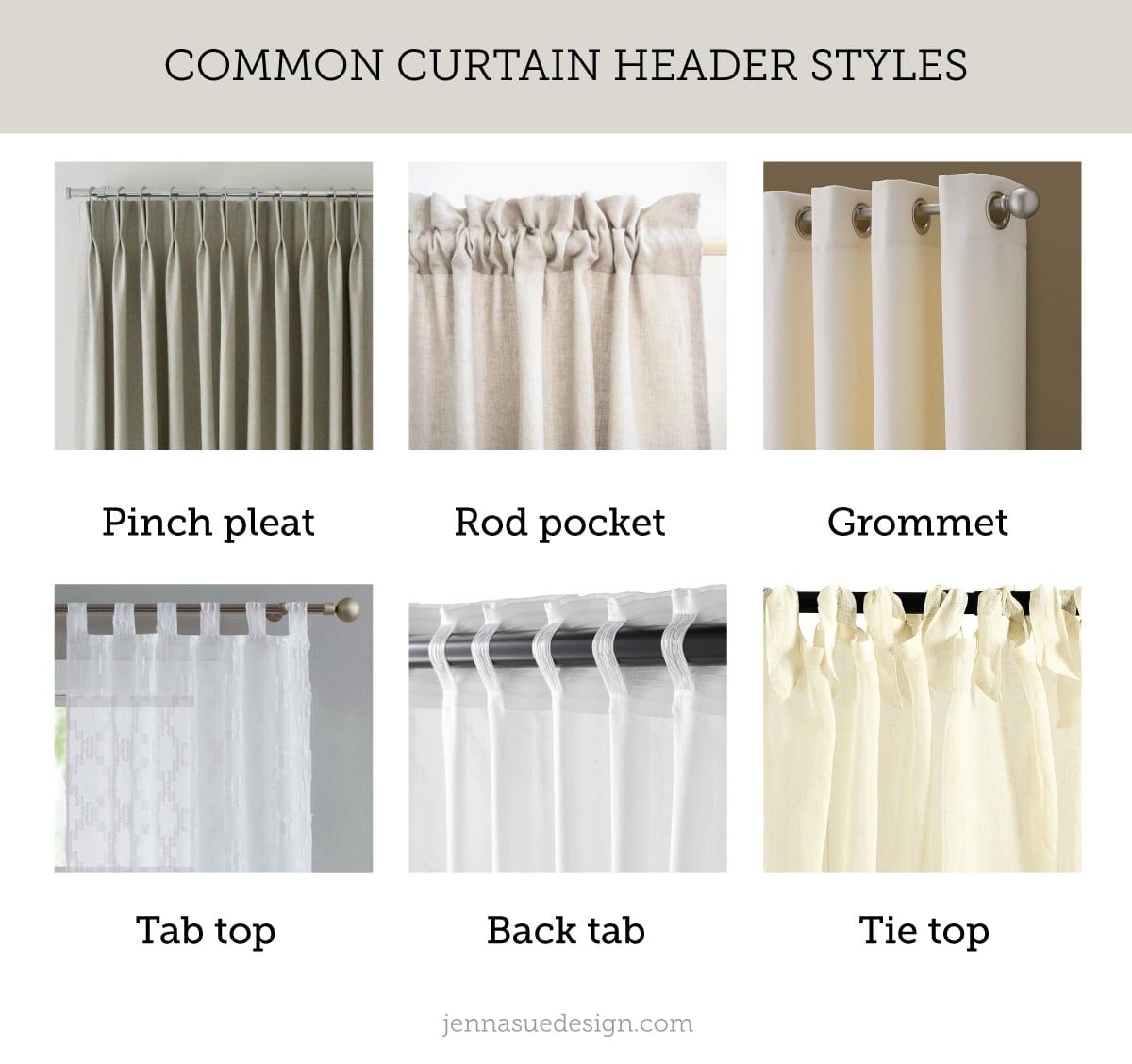
Pinch pleat headers provide the most polished look, and are most often used by designers. That said, they are the most expensive option. If they do not fit the budget, use clip rings on the back of inexpensive curtain panels(like I did in our bedroom):

Curtain material
This is largely personal preference, but if you want that high-end designer look, choose a linen or linen-blend fabric. Pure linen is one of the most expensive fabric options, but there are some great affordable faux linen options out there.
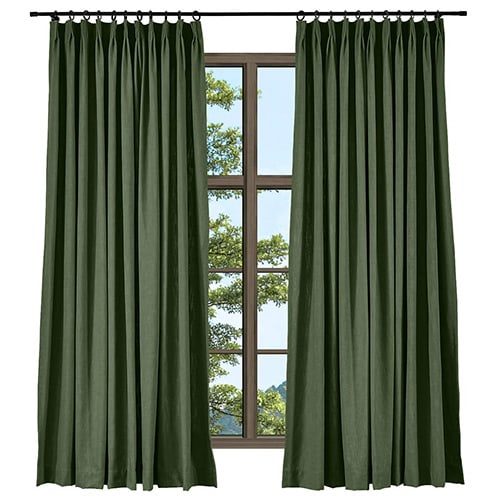
One of my favorite more affordable sources is Two Pages (also available on Amazon). Their Isabella line is made from a high quality linen-cotton blend, with a ton of different color and header styles, and the size is completely customizable. I chose the Hunter Green fabric with a blackout liner.

Adding a blackout or privacy liner will help disguise the sides of the window by blocking the light and making it appear wider.

Curtain size and length
This is the most important to get right (and the most common mistake!) My general rule of thumb is to mount the curtain rod around 10-12″ above the window trim, and have the curtains kiss the floor. This provides the most polished and tailored look while making your window appear larger. If you are using the outside-mount blackout shade trick to make your windows appear taller, mount the rod a few inches above the top of the shade.
Note: There is a popular belief that curtains should be mounted all the way to the ceiling, but that is not always the case. If you are not using outside mount shades, stick within the ~10-12″ above the window range for proper balance.
This diagram is a general guide and should be modified based on your specific room's configuration/layout, but it is a good place to start:

For example: if your window is 40″ wide and the rod extends 20″ past it on each side, each panel should be 80″ wide for a full pleated look when closed.
Note on width: This rule does not apply to pinch pleat curtains—for those, you can order the exact width you need since the curtains have built-in pleats when fully extended.
I wanted mine slightly fuller, so I added an extra 5″ of width to each panel. I also made my left panel 10″ wider than the right panel to account for the off-center wall—that way, the fullness would match on both sides.

I also chose to fill the entire wall with curtains to eliminate any awkward space from the off-center wall. You certainly do not have to do this (and I would not in most situations), but a wall of drapery can feel luxurious and give off hotel vibes in a bedroom.
How to hang curtains like a pro
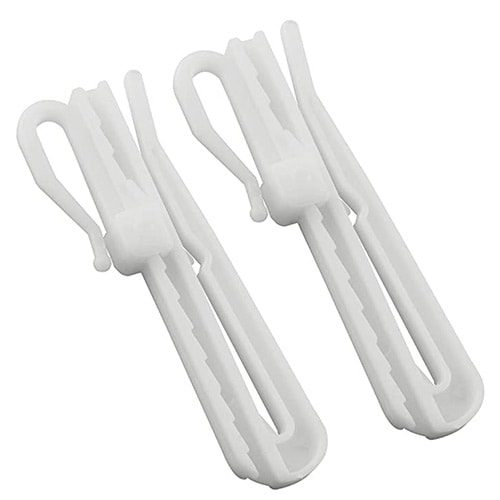
My #1 tip for installing curtains at the well suited height—use adjustable drapery hooks! These came with my Two Pages curtains and they are an absolute game changer. Note: these only work with pinch pleat curtains.
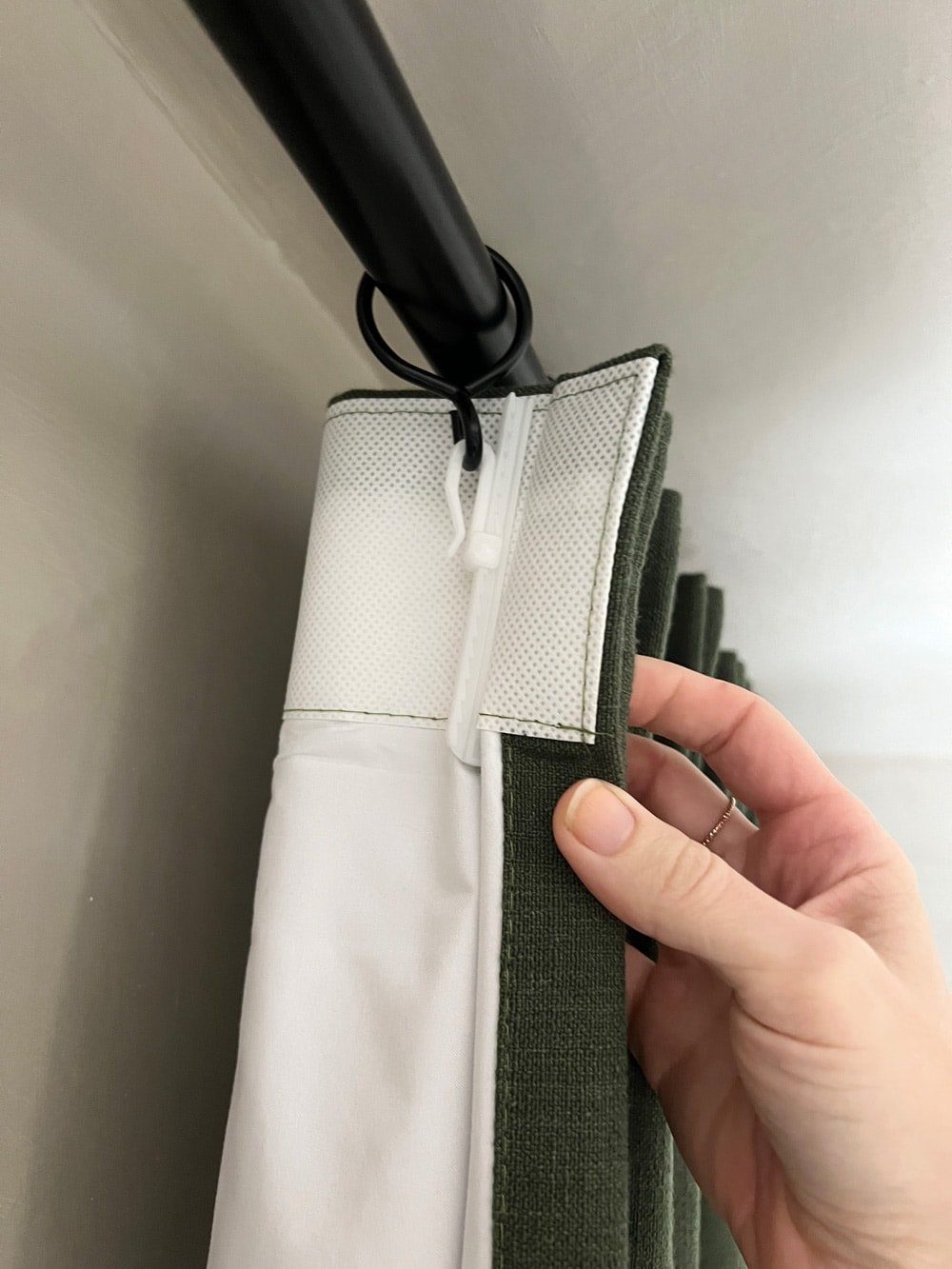
These hooks allow you to adjust the curtains up and down almost 3″, so each pleat can touch the floor at the well suited length. You do not have to worry about installing the rod at a precise location, or the curtain hitting the floor unevenly (which always happens!) They are truly a must-have and my favorite trick for hanging curtains perfectly every time.
Before and Afters
This awkward bedroom window stood out immediately, placed far too low and off-center in the room:
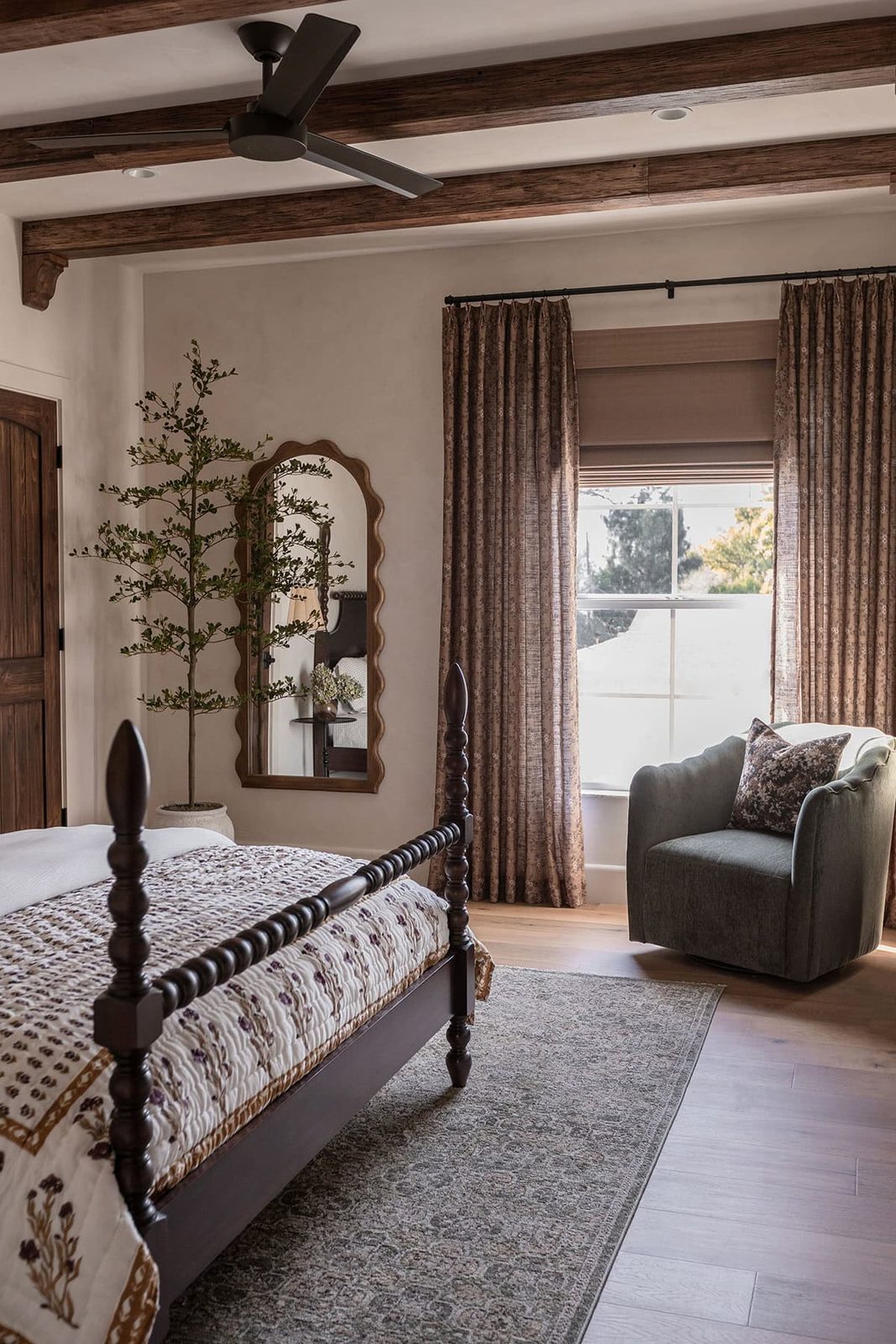
With a few unfussy window treatment tricks, the same wall now stands out as a feature of the room, making the space feel larger and luxurious:
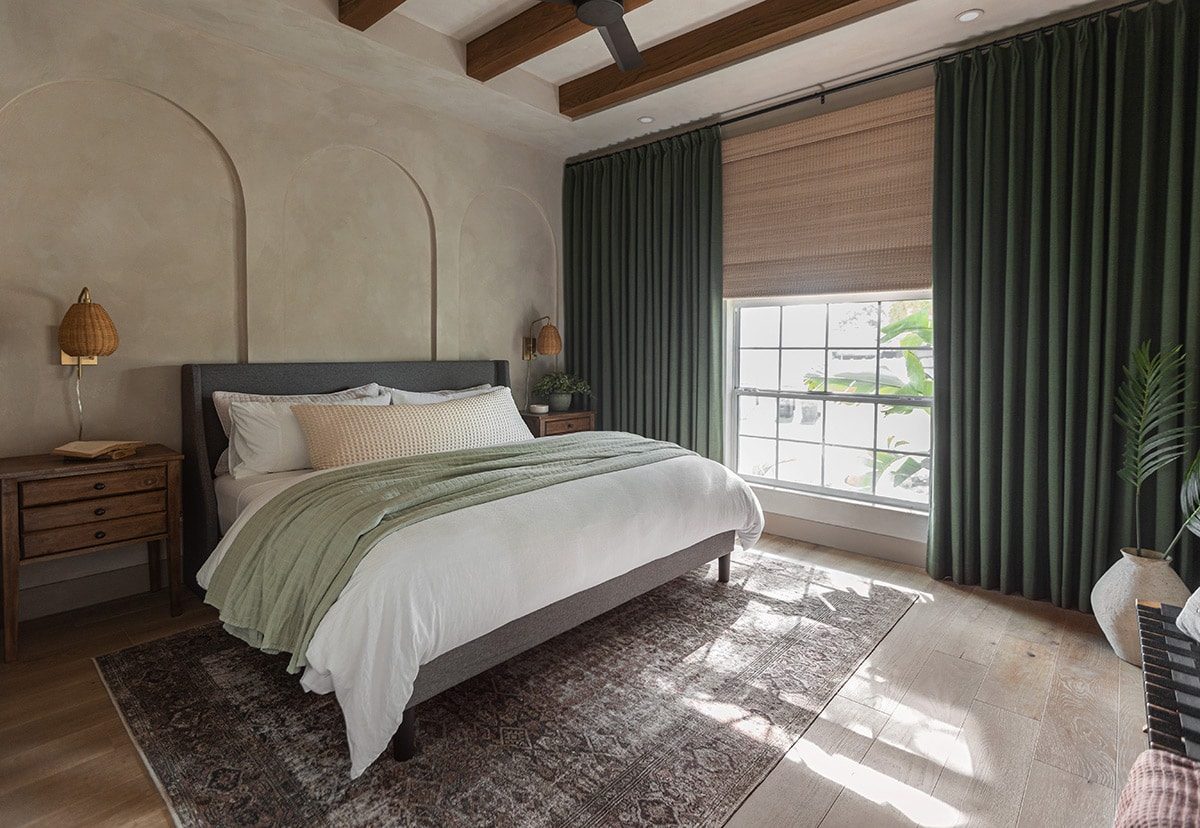
Here is another before and after example to illustrate the power of window shade and curtain placement:
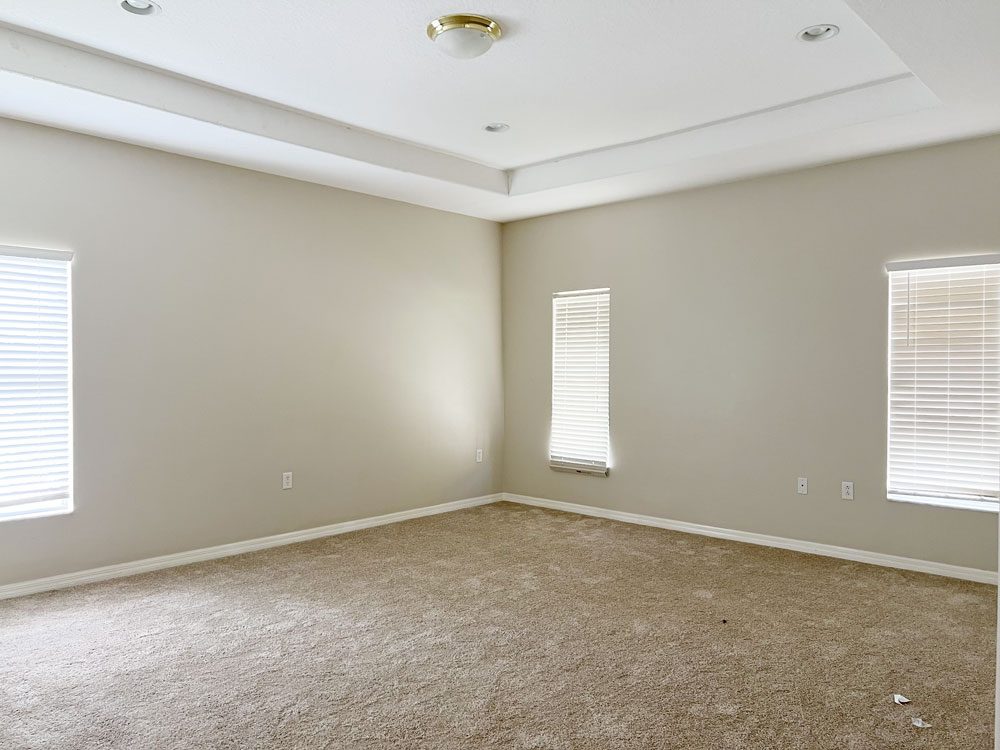

One more transformation from the Spanish Sanctuary:
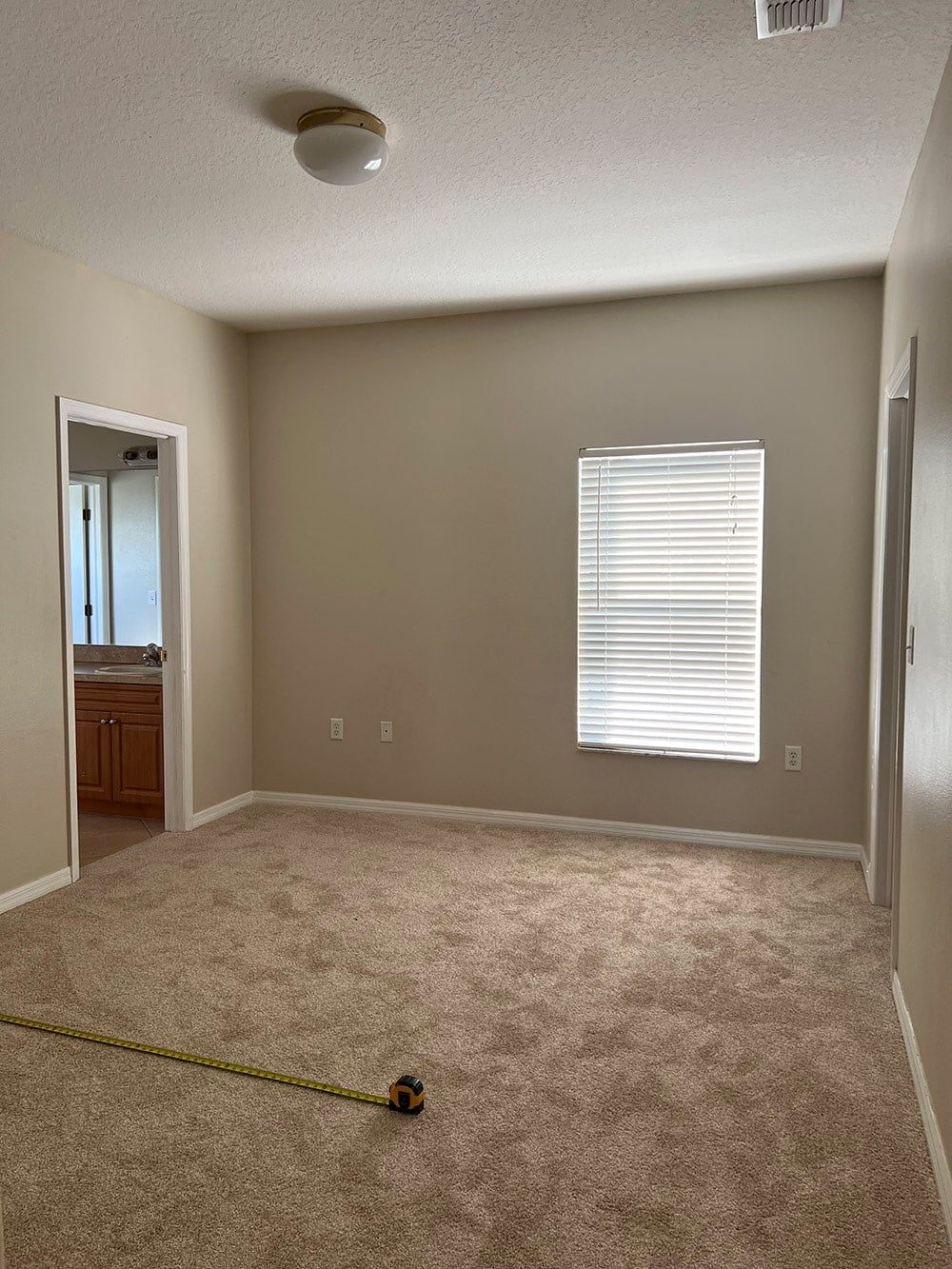
This one got a full makeover with my easy DIY window grids.
Where to buy window shades
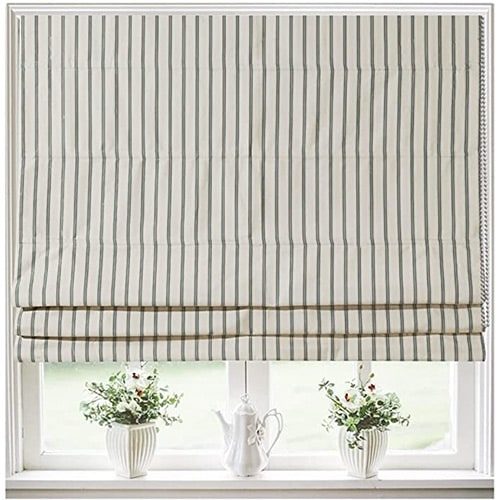
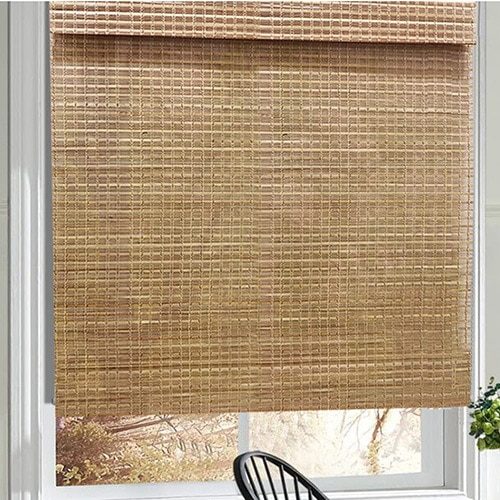
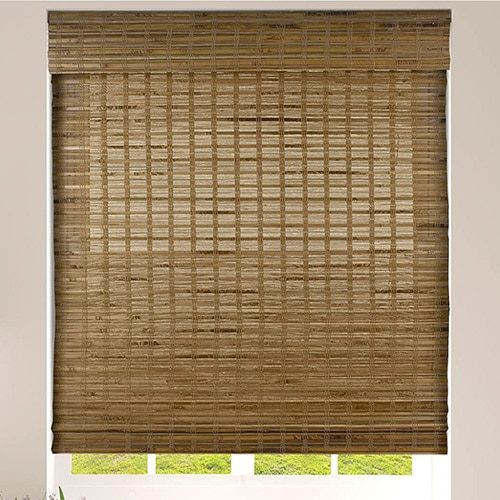
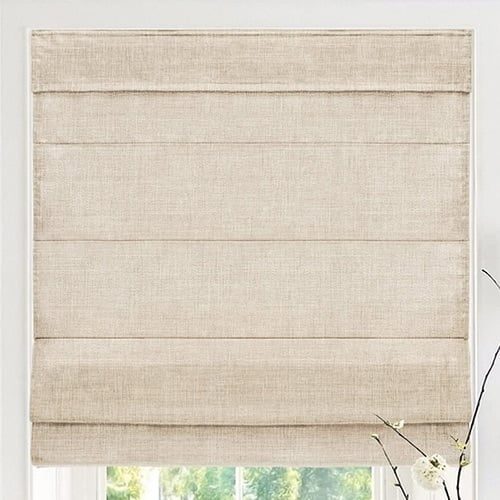
There are many great sources online for custom window shades. I find the best value on Amazon, but here are a few more of my go-tos:
- Amazon
- TwoPages
- JCPenney
- Wayfair
- Overstock
- Etsy
- Blinds.com
- Blinds Galore
- Select Blinds
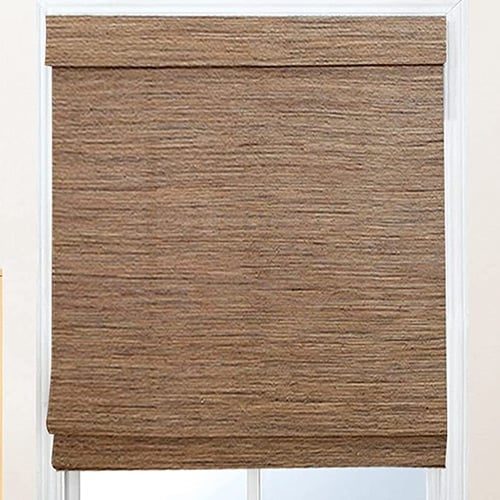
Tap to shop some of my favorites:



Where to buy curtains
When shopping for curtains, keep in mind the key features to look out for:
- Size: Choose panels that are extra wide and the proper height for your ceiling
- Header style: Opt for pinch pleat when possible
- Fabric: Look for linen/linen blend, textured cotton blends, or velvet
- Liner: Add a liner when possible (privacy, room darkening, or blackout depending on your needs)
Here are a few of my go-to curtain sources:
- Amazon
- TwoPages
- Etsy
- Target
- Wayfair
- Anthropologie
- Pottery Barn
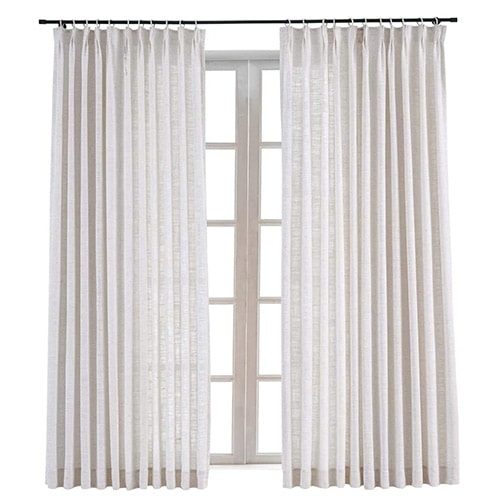
Tap to shop some of my favorites:
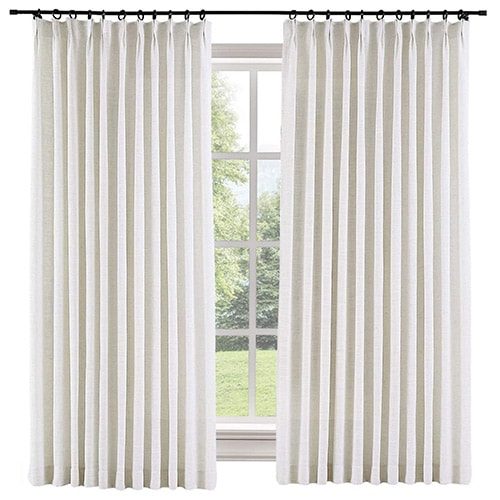
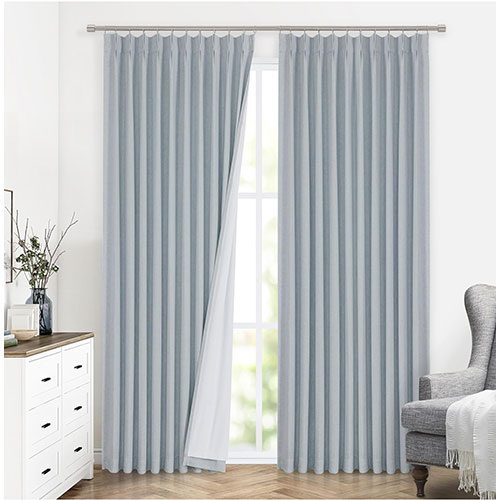

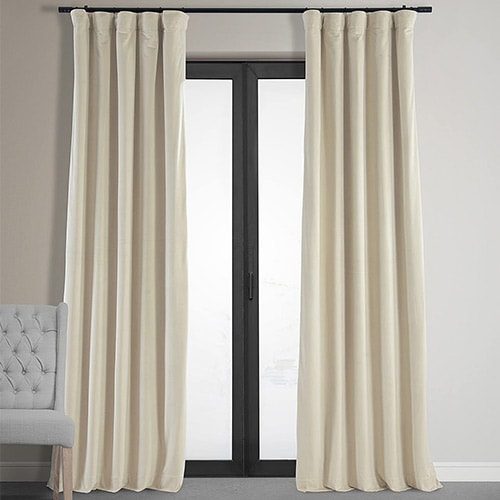
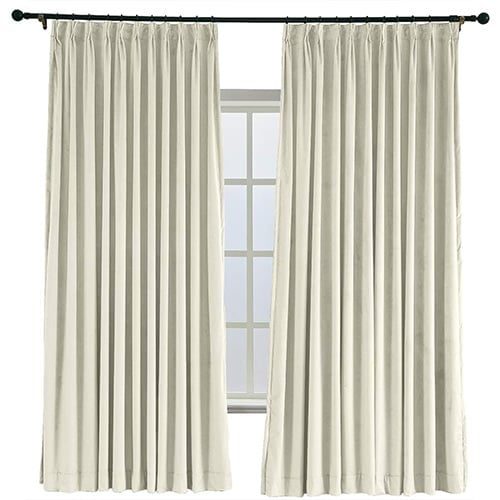
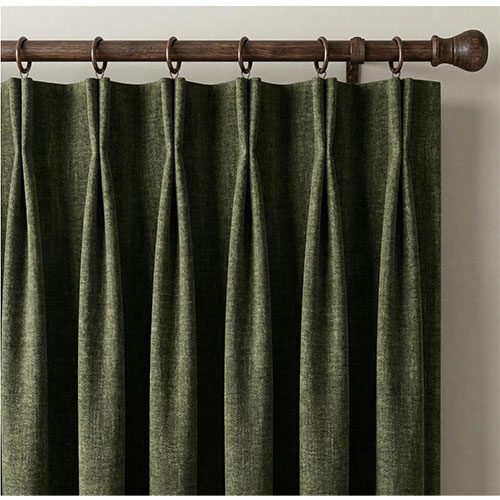
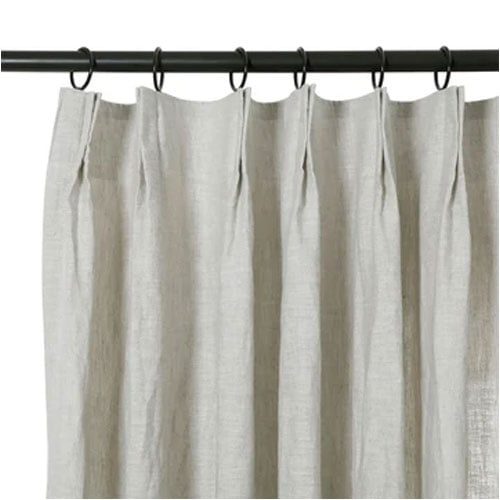

You will notice that pre-made panels typically come in 40-50″ widths, which is not substantial enough for windows wider than a few feet. For larger windows, you will need to go custom or use multiple panels per side.
Where to buy curtain hardware
Once again, Amazon is my go-to here—you just cannot beat the price or selection. Here are a few other places to shop curtain hardware:
- Wayfair
- Anthropologie
- Target
- Bed, Bath & Beyond
- Ikea
- Lowe's
Here are some of my curtain hardware go-tos:
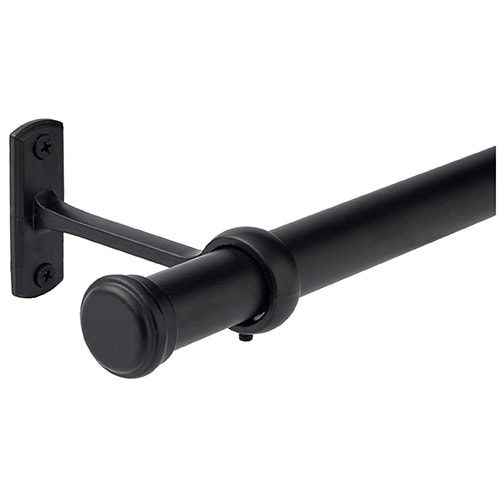


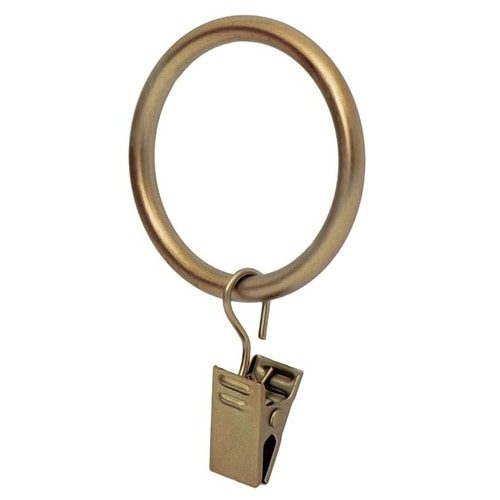
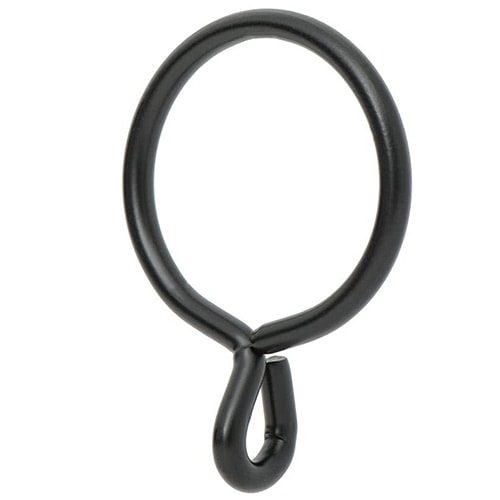
Bonus tip: if your curtain rings are getting stuck on your rod, this curtain rod tape is a game changer! Alternatively, you can use a traverse curtain rod to ensure a smooth glide every time.
Window treatment Q&A
How high should I hang my curtain rod?
For windows with no outside-mount shades, aim for ~10-12 above the window trim. For windows with outside-mount shades, place the rod a few inches above the top of the shade.
Should curtains touch the floor?
For a tailored designer look, aim to have your curtains kiss the floor. Use adjustable drapery hooks to easily fine tune the length after hanging.
How wide should I hang my curtain rod?
To make the window appear larger, mount the brackets at least 20″ past the window on both sides if room allows. For larger windows and walls with plenty of empty space, mount them as wide as you'd like!
How wide should curtains be?
Each panel should be at least the length of the curtain rod for a fuller look. Example: if your window is 40″ wide and your curtain rods extend 20″ on each side, each panel should be 80″ wide to maintain a pleated look when fully closed. Note: this rule does not apply to pinch pleat curtains, which have the pleats already built-in.
Should I use inside or outside mount window shades?
To make your window appear taller or wider, install outside-mount window shades (with a blackout liner) larger than the size of your window. For a clean and tailored look, inside mount shades are a great option.
I hope this post sheds some light on how to choose the right shades and curtains, so you can feel confident choosing window treatments moving forward. If you found this guide helpful, do not forget to bookmark or pin it for later!