How to Bleach Wood
How to lighten and remove the color from any wood with wood bleach! See the results on red oak, pine, cedar, mahogany, butcher block and more.
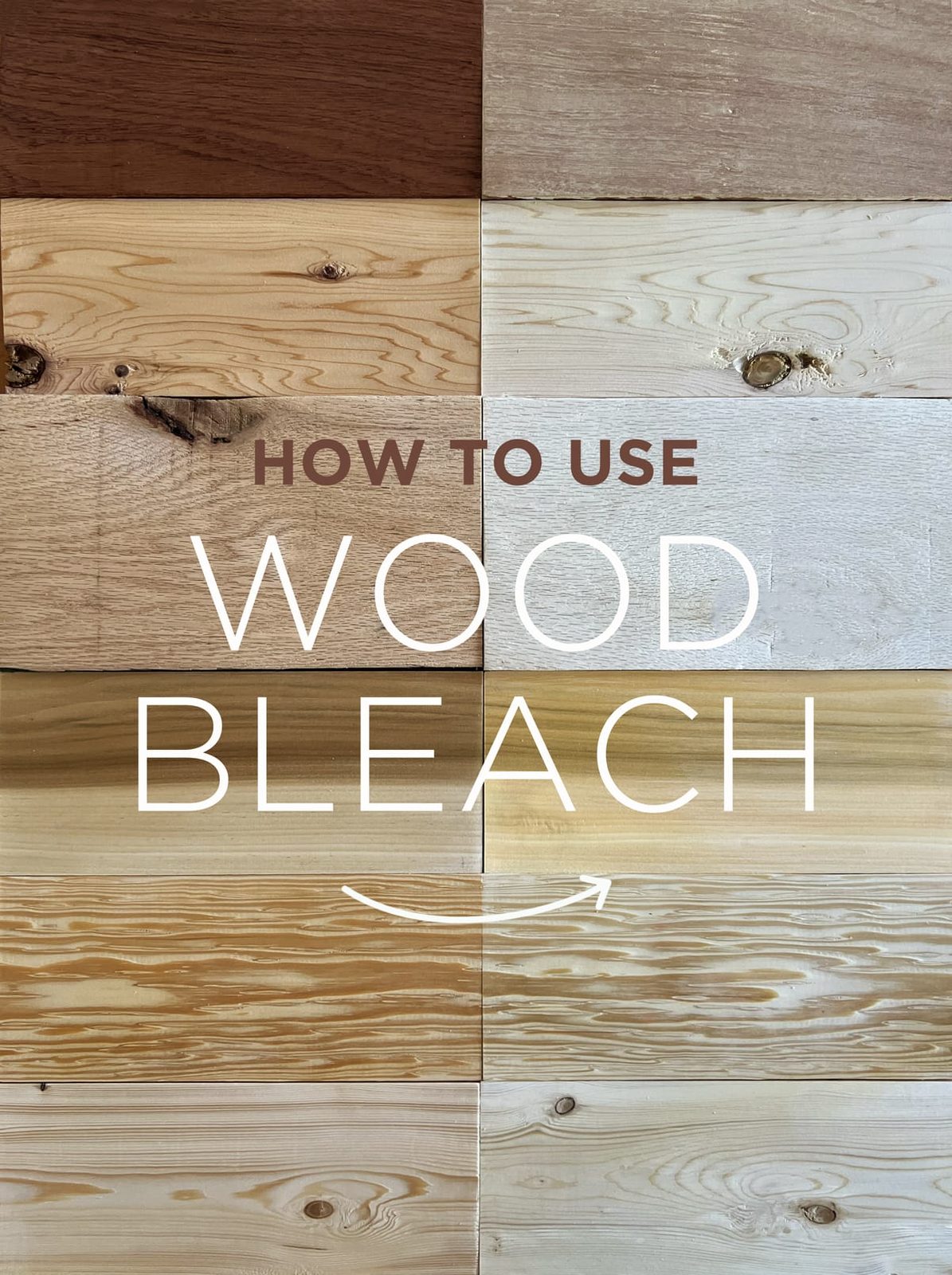
Whether you are trying to change the color of wood or match an existing piece, wood bleach is a game-changer that every DIYer should know about. In this post, I'll share the three different methods to lighten wood, a before + after test on six common species, and how I bleached our butcher block countertops!
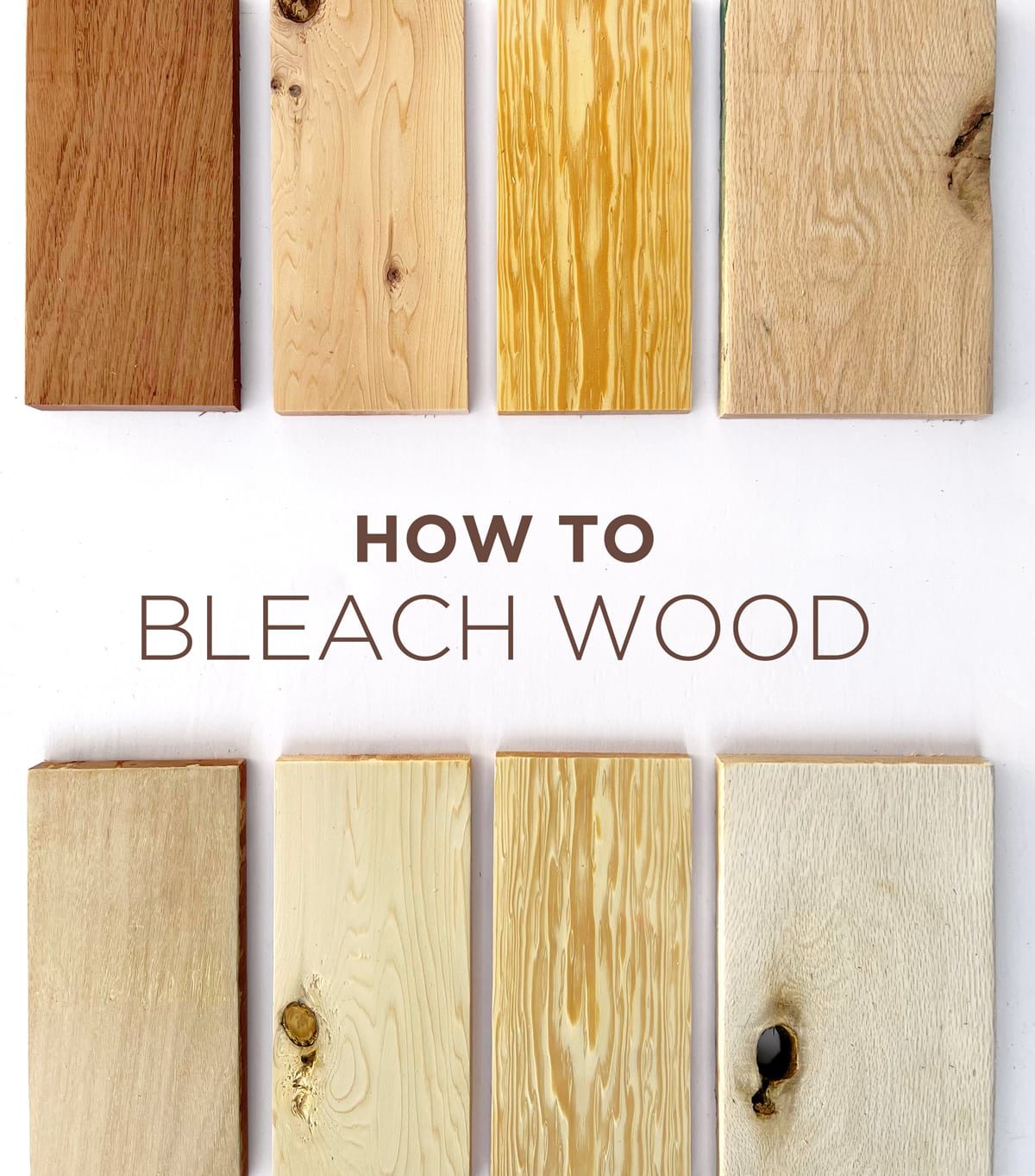
If you've had experience staining wood, you probably already know that wood stain only enhances the color of the wood, it does not completely change it. Even semi-solid stains allow the underlying wood tone to show through. Bleaching wood is the only way to remove the color, giving you much more control over the desired outcome.
There are three ways to lighten wood quickly:
- Household bleach: Laundry (chlorine) bleach is commonly used to lighten wood, as it is inexpensive and readily available. This method is effective at removing stains and dyes, however it will not change the natural color of the wood.
- Oxalic Acid: Sometimes labeled as “wood bleach”, oxalic acid is a cleaning agent used to remove iron and rust stains. Like chlorine bleach, oxalic acid may be able to lighten certain species of wood, but it will not truly remove the pigment. It is also a toxic substance and must be used with caution.
- Two-part bleach: Also known as A/B bleach, this solution is made with sodium hydroxide and hydrogen peroxide. When combined, they cause a chemical reaction specifically designed to alter the color of the wood. This is the only true “wood bleach”, and fortunately it is inexpensive and easy to get!
Wood Bleach Test
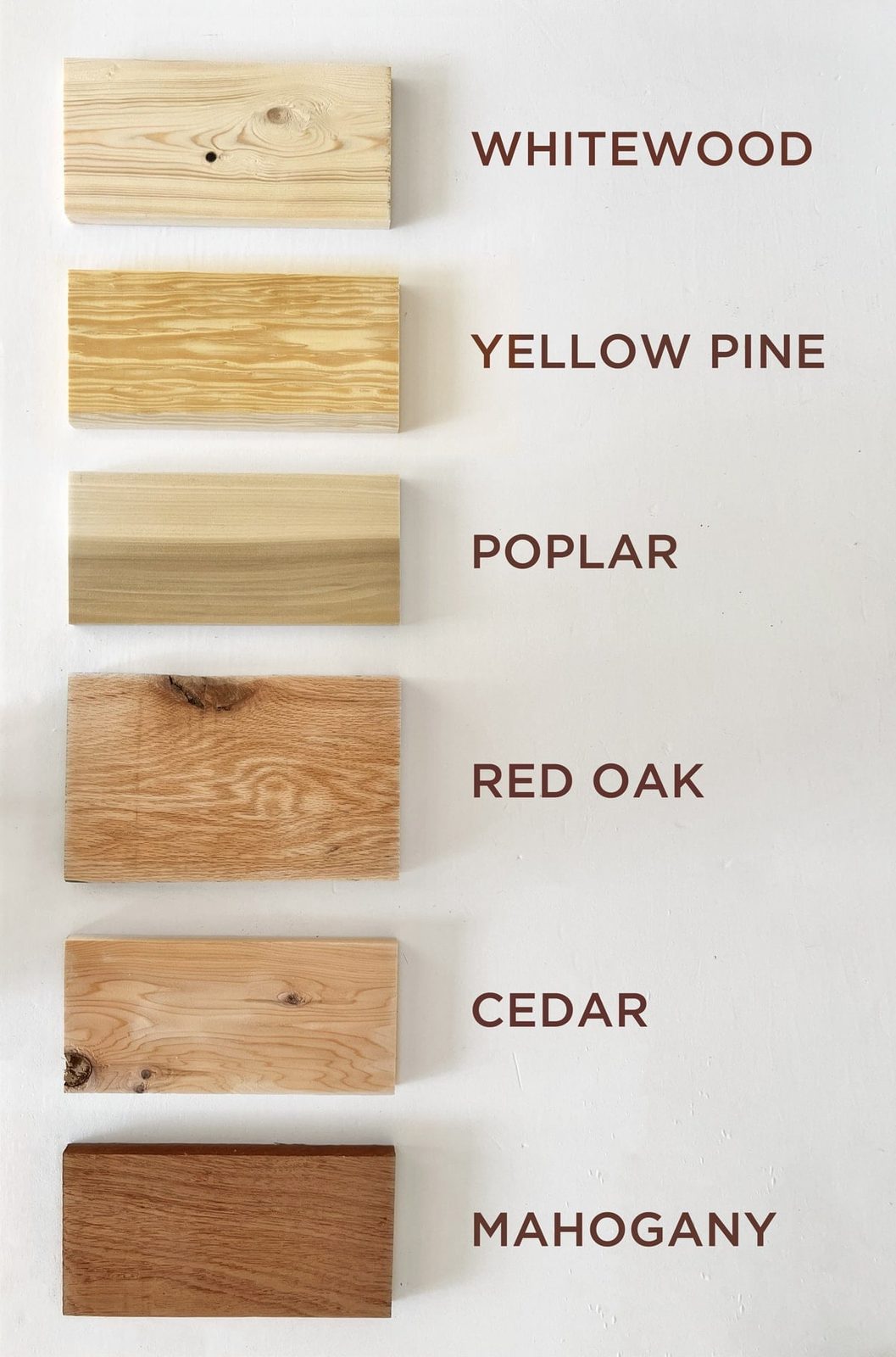
I thought it would be a fun experiment to test the bleach on six common species of wood: whitewood, yellow pine, poplar, red oak, cedar and mahogany. Let us see the results!
Bleached Whitewood
This is the cheapest lumber commonly found at Lowe's and Home Depot. It is already quite light in color as the name suggests, so the effects are not dramatic, but there is still a noticeable difference. You can see how the orange tone is completely removed after two coats.
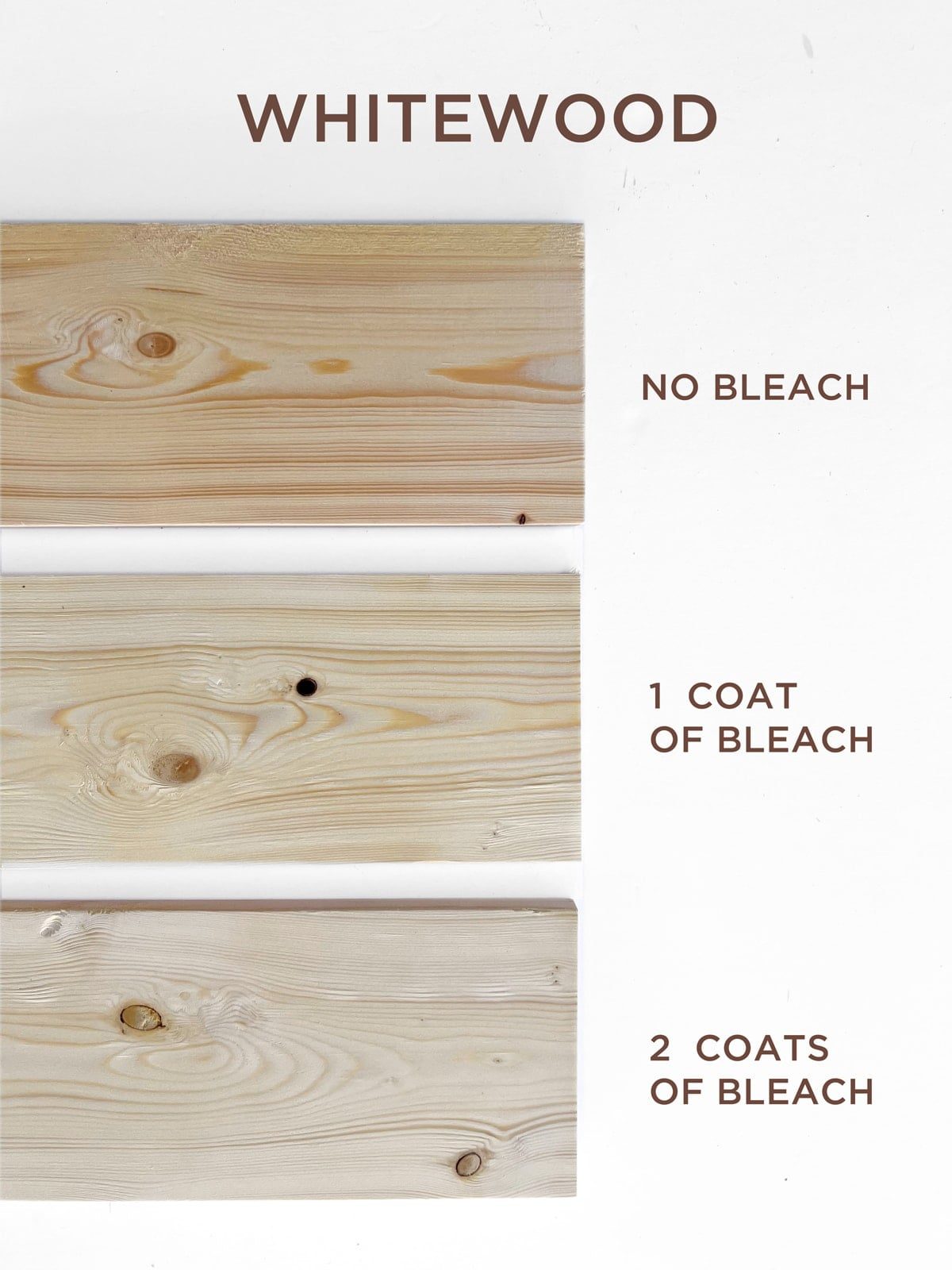
I used whitewood often back in the day when the budget was tight, but due to the knots and overall quality, it is not a species I would recommend for staining.
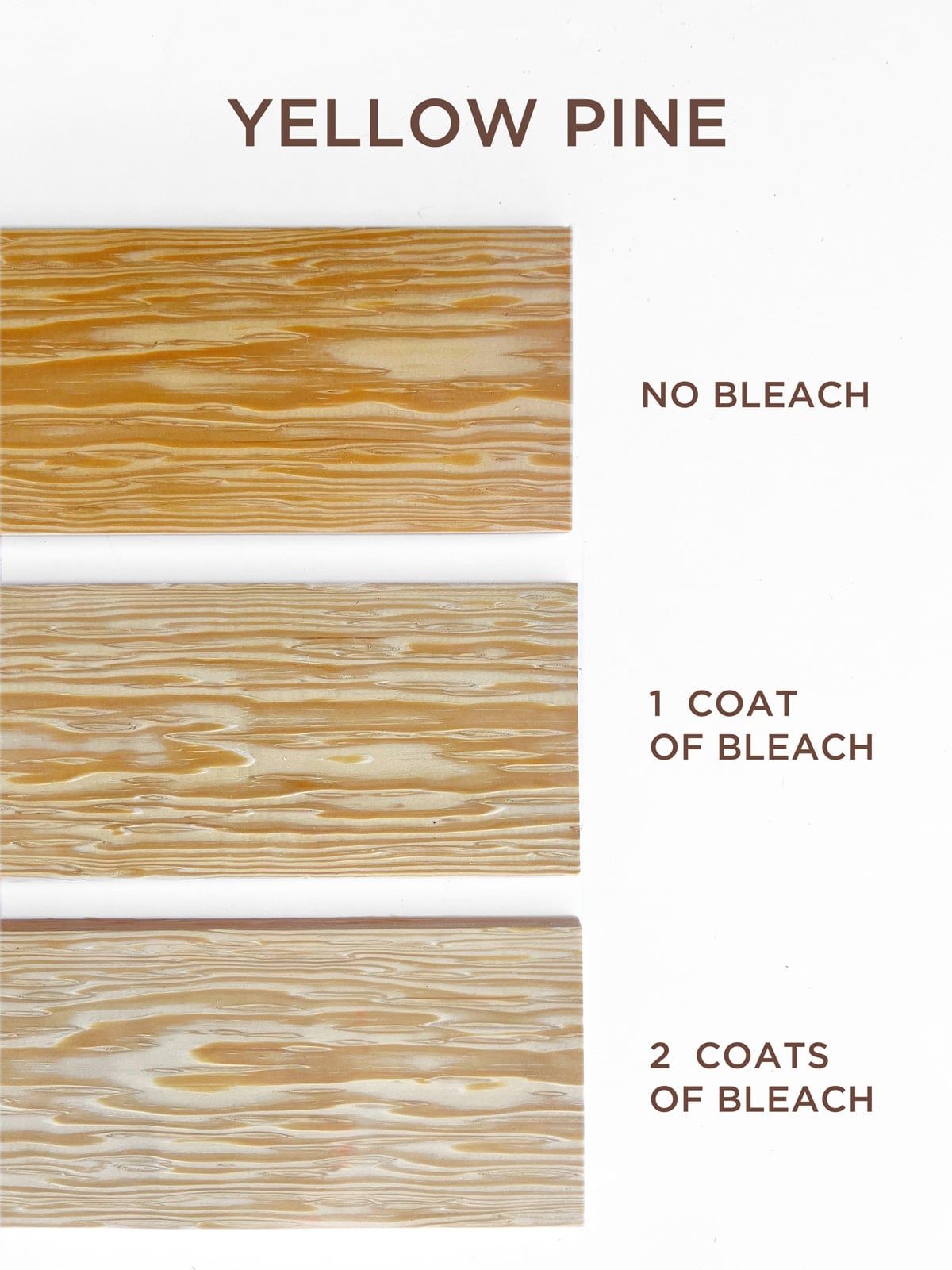
Bleached Yellow Pine
Pine is another commonly used wood as it is affordable and easily accessible. Yellow pine has a strong yellow/orange tone naturally, and it was quite stubborn to remove, even after two treatments of wood bleach. Still, it lightened significantly after one coat!
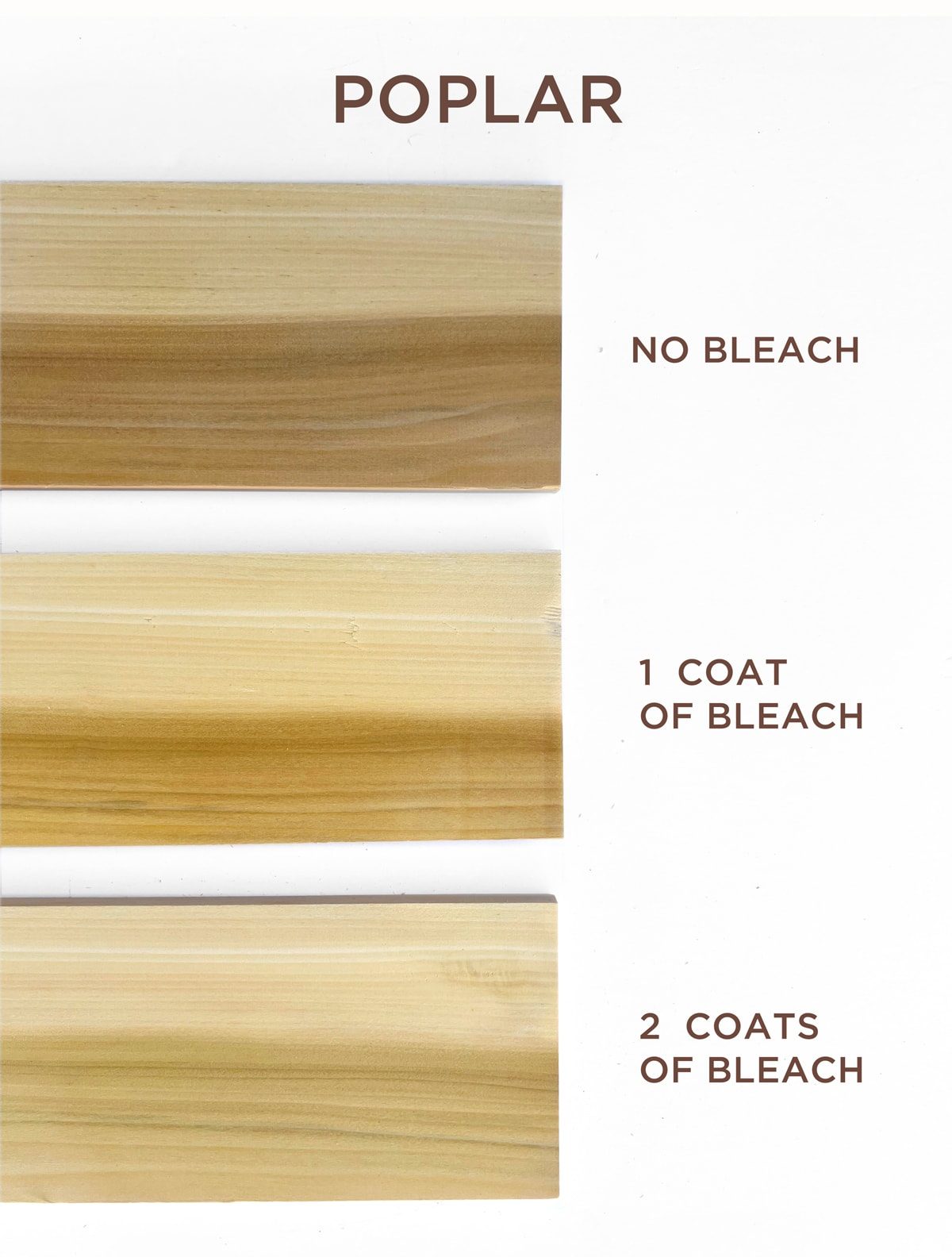
Bleached Poplar
Poplar is a step above pine in terms of price and quality, thanks to its smooth texture and lack of knots. While it does react to wood bleach, the drastic color variation and unpredictable green-yellow-orange tones make it a better candidate for painting than staining (IMO).
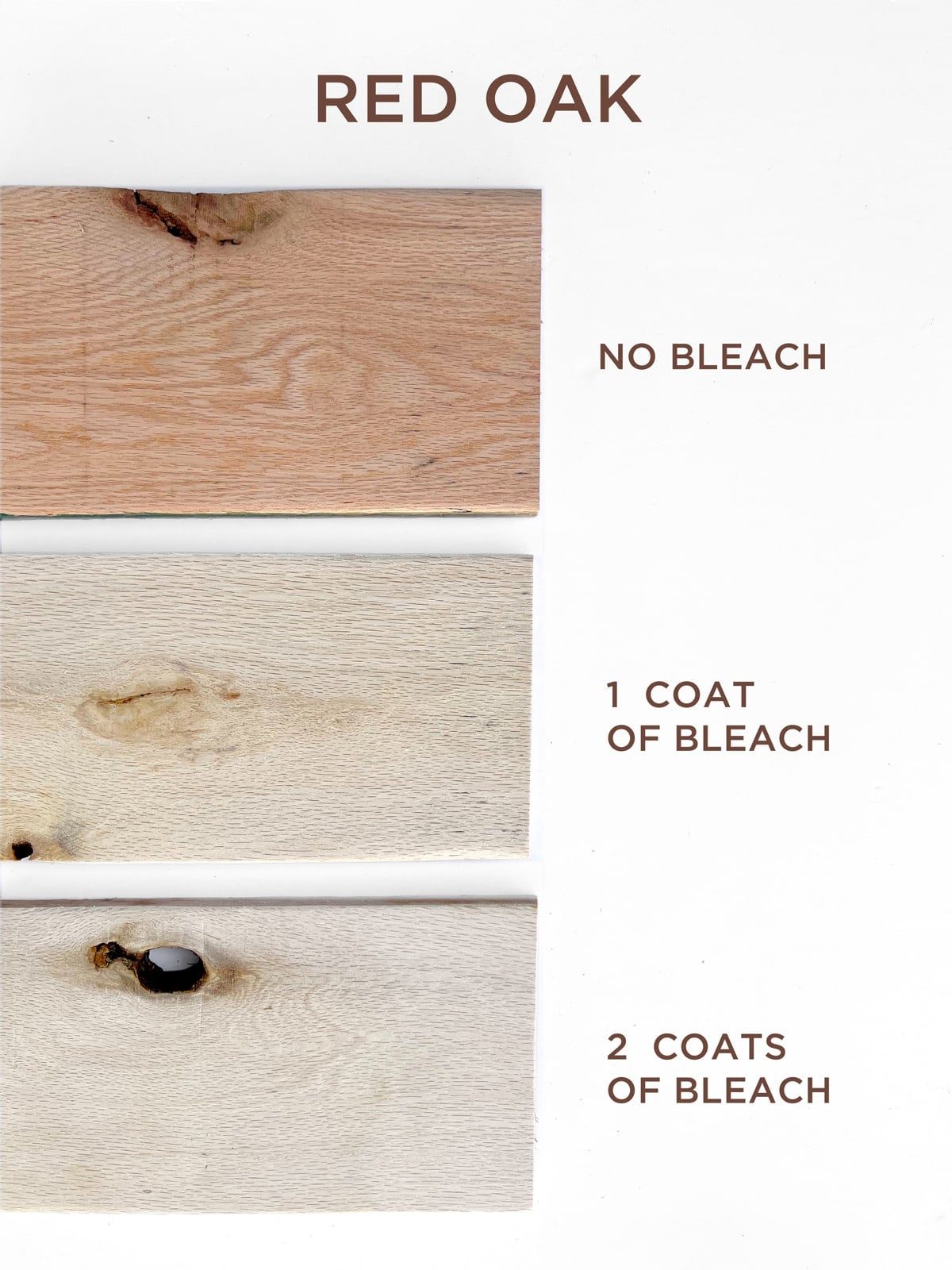
Bleached Red Oak
The most exciting of them all—I have discovered a secret hack for white oak! All traces of pink were immediately removed from this board after the first coat, leaving just the well composed oak grain. This trick is the well suited alternative to red oak's highly desirable, more expensive and harder to find cousin, white oak.
Bleached Cedar
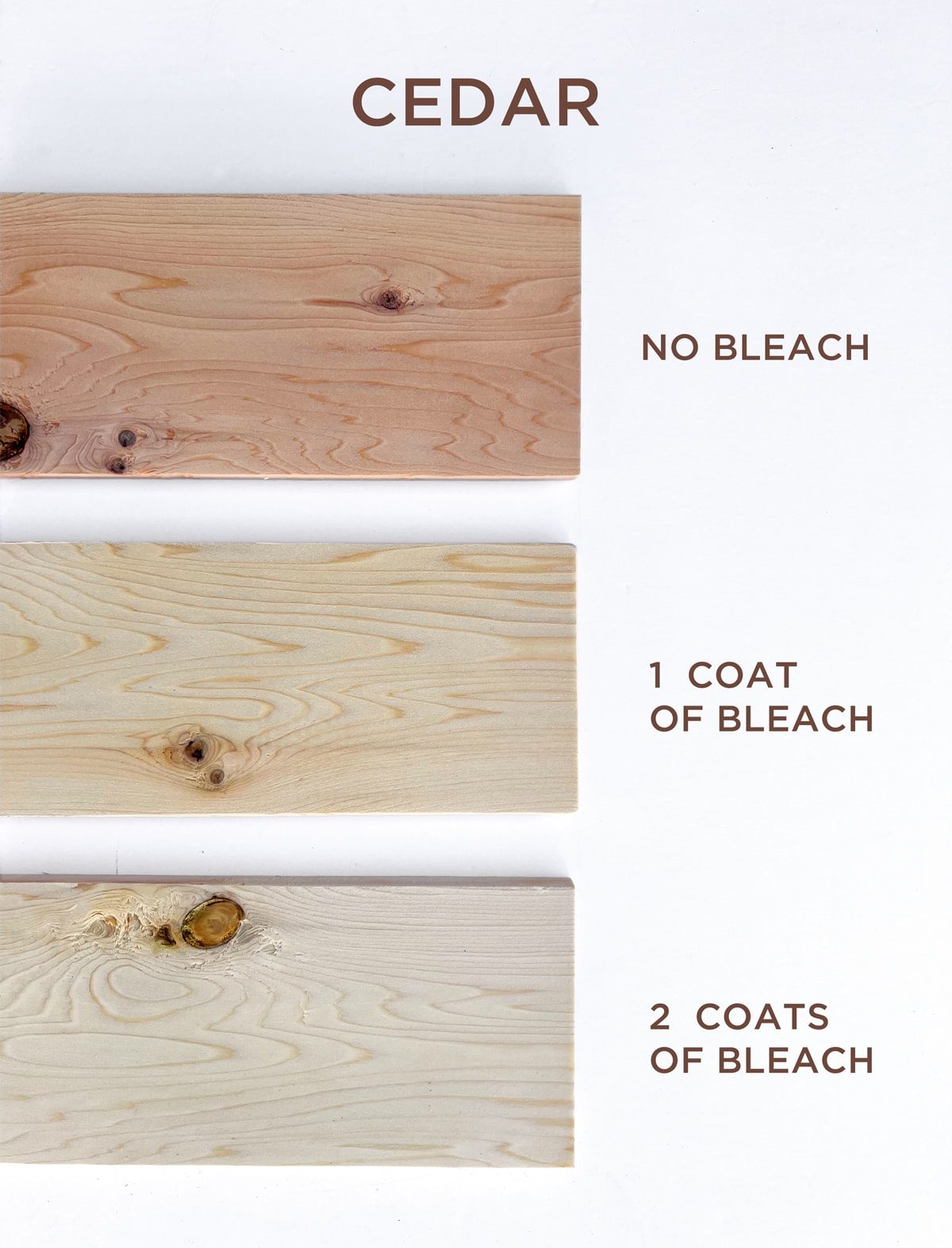
Cedar is a common species in furniture, but often has strong orange/red tones that you may want to alter. Fortunately, the piece I tested reacted very well to the wood bleach, taking on a neutral white pine appearance after two treatments.
Bleached Mahogany
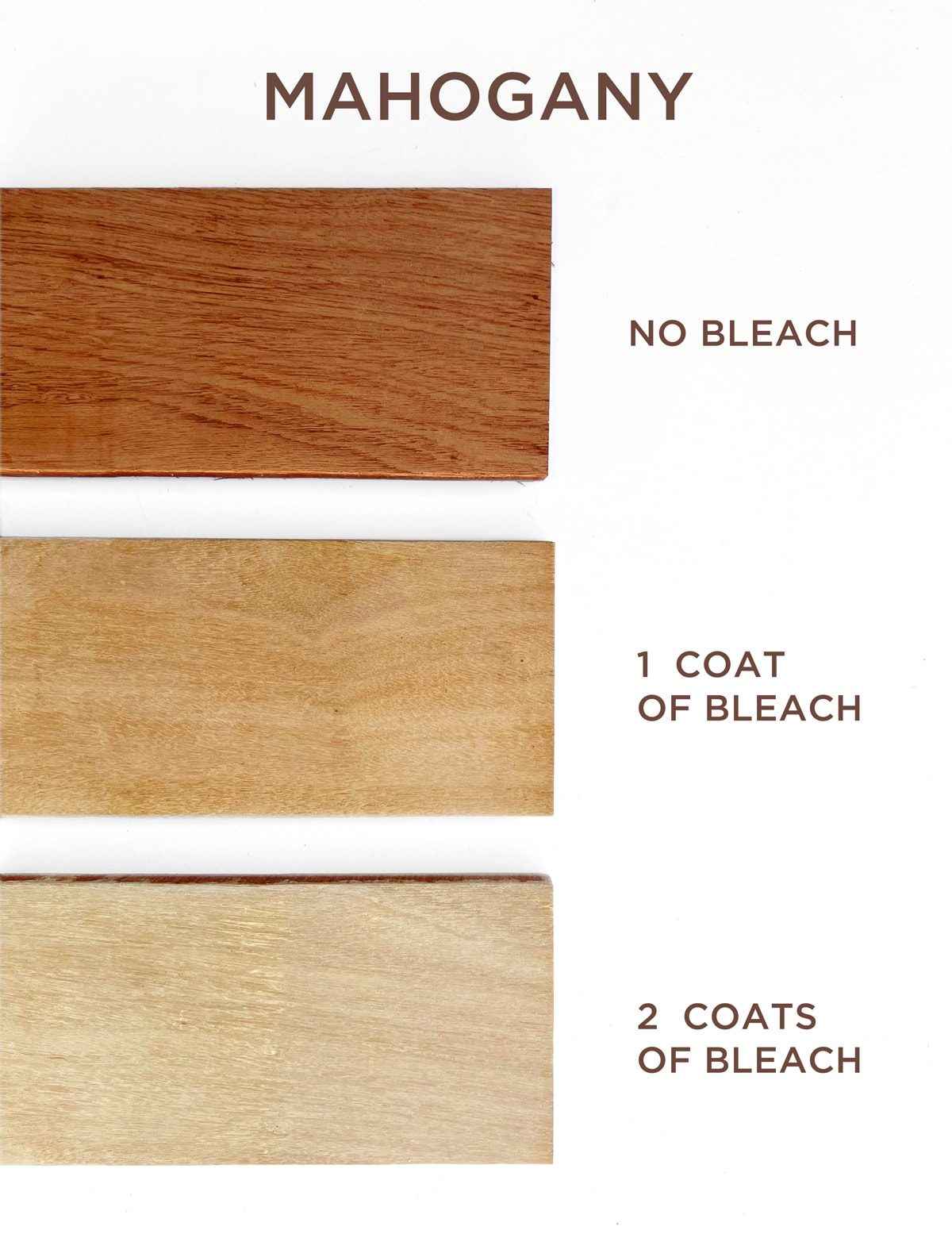
Mahogany is a rich, dark reddish-brown wood and I was not sure how well it would lighten. I was pleasantly surprised to find how easily the color lifted, and would likely continue to lift with additional coats.
How to Bleach Wood
Bleaching wood is a very unfussy, practically fool-proof process. Here is what you will need:

Supplies
- Two-part Wood Bleach
- Sponges or brushes
- Gloves
- Safety glasses
- Sandpaper
- Floor protection
For this tutorial, I bleached the butcher block countertops for our laundry room. A while ago I shared a whitewashing butcher block tutorial, but this time The aim was to try removing the color from the wood first.
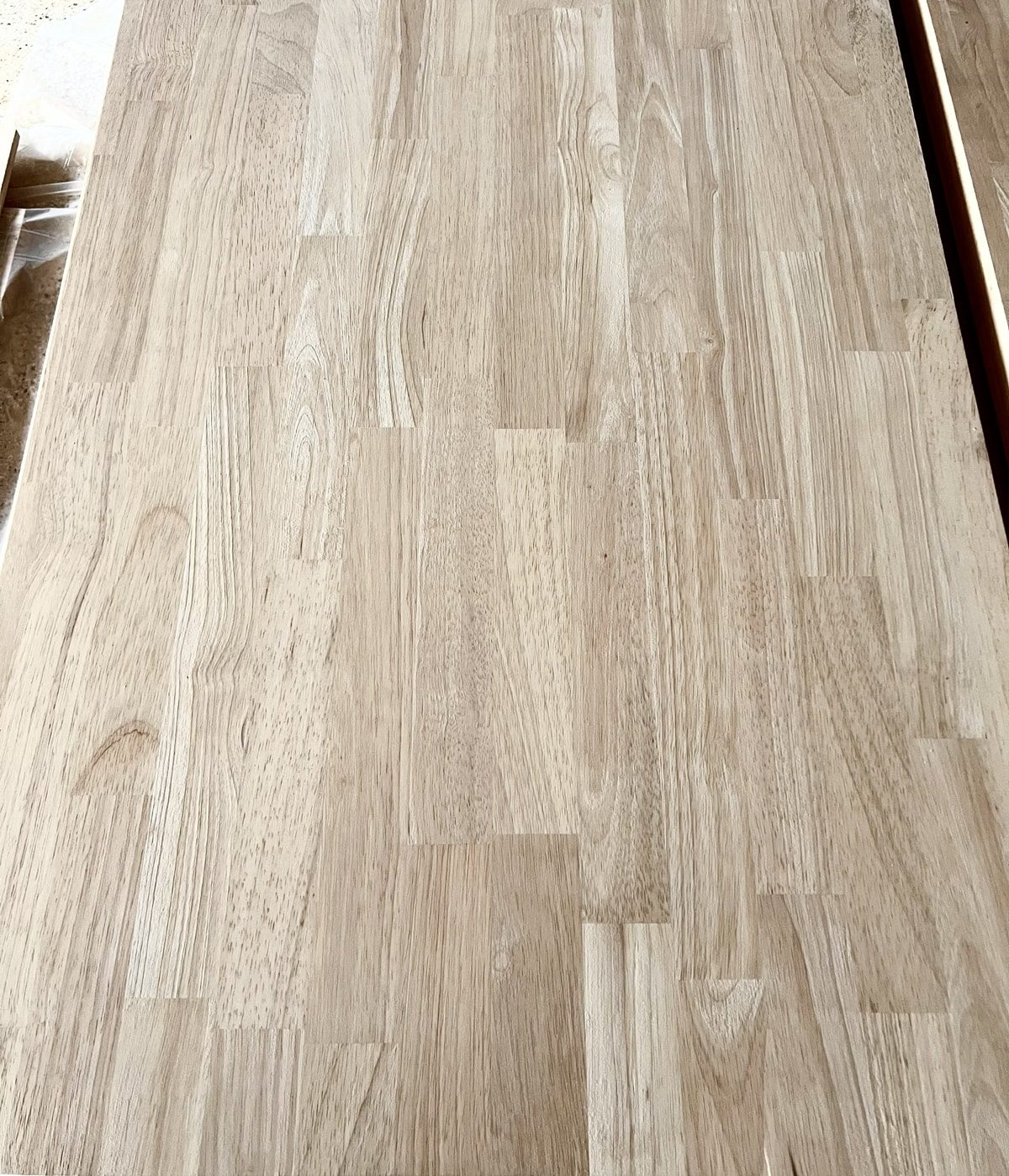
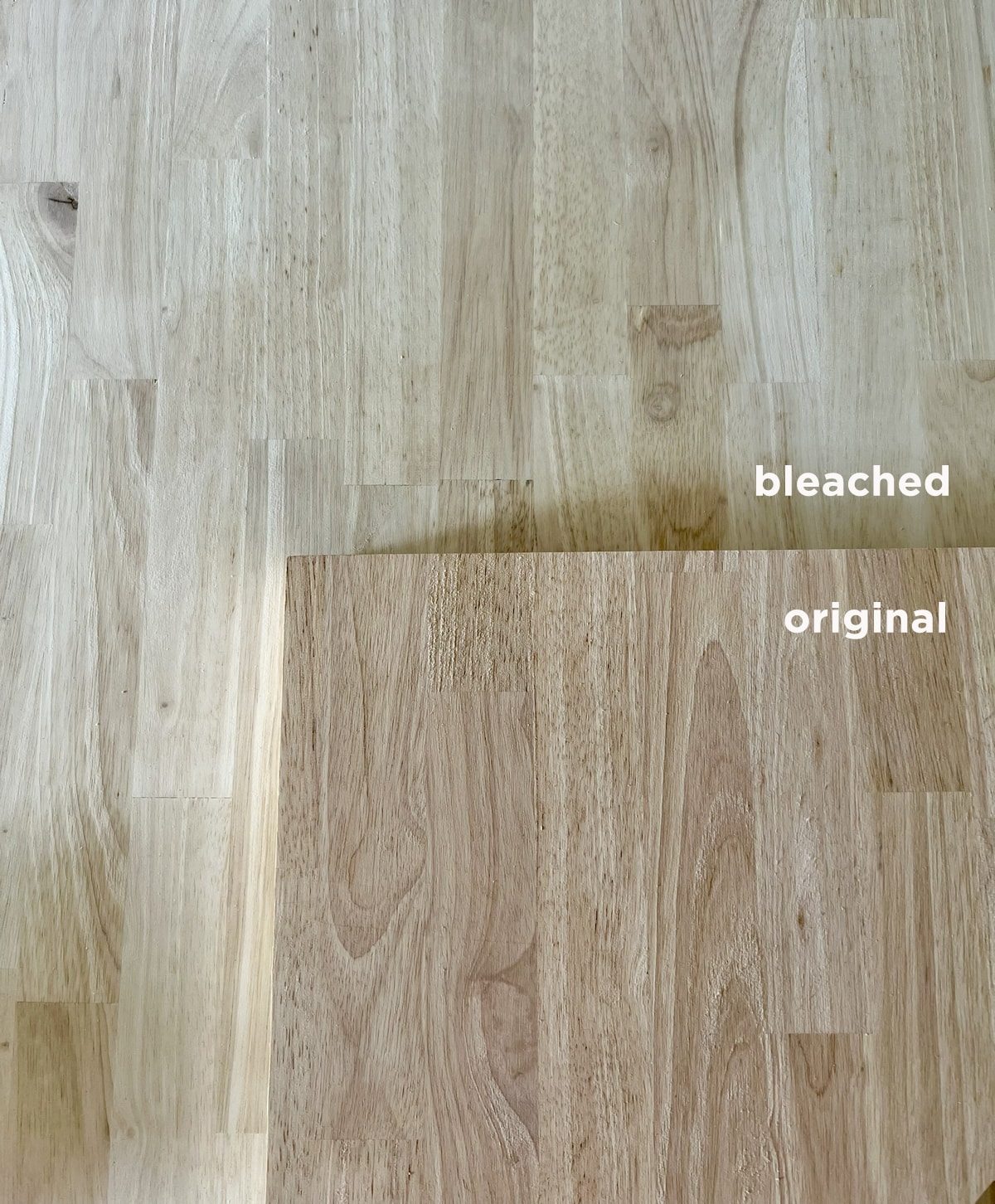
Butcher block appears to be a relatively light wood naturally, but as soon as you apply any stain, oil or poly, it becomes much darker and orange-yellow toned. I was very curious to see if bleaching would eliminate this.
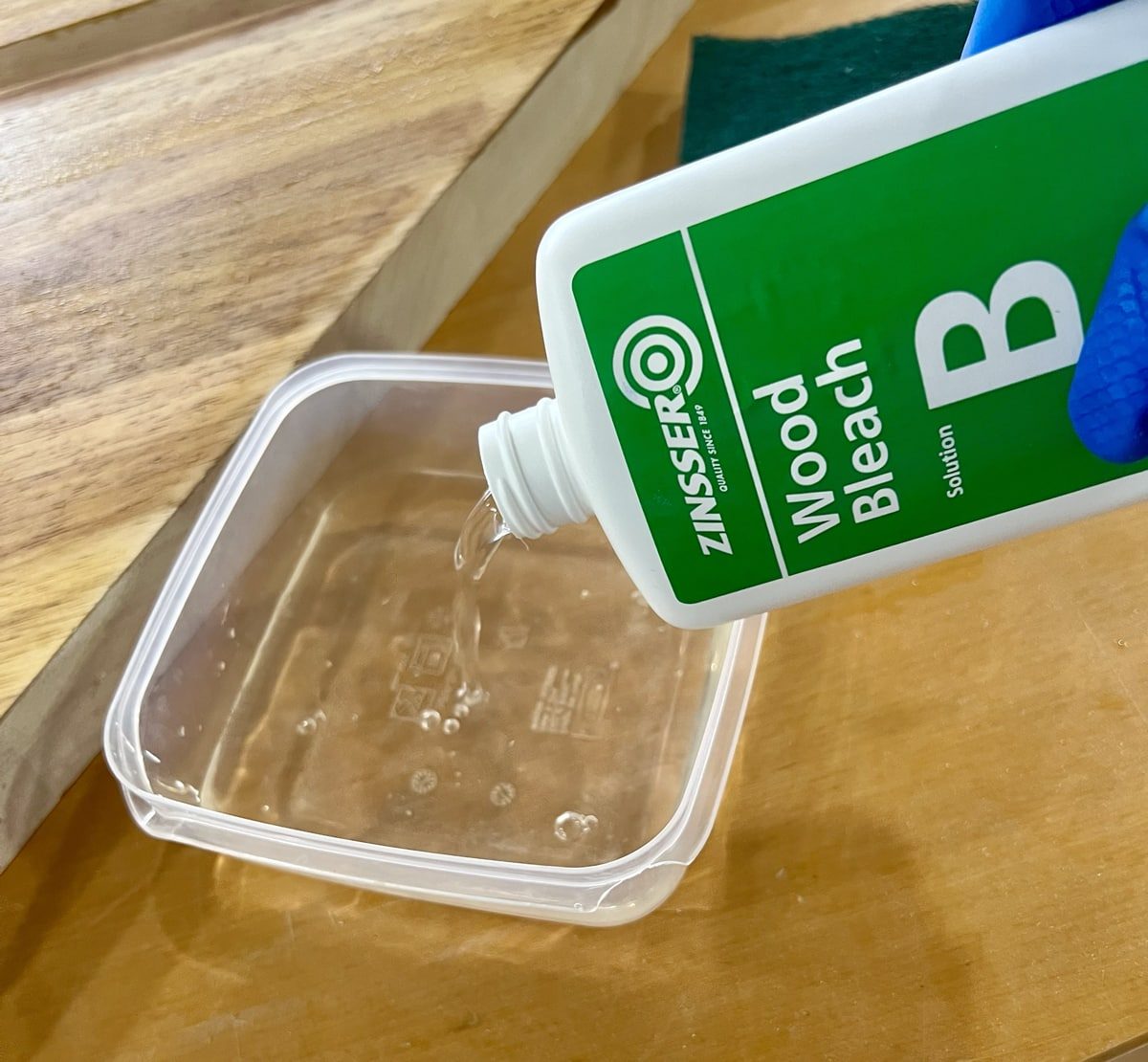
Pour solution A into a container…
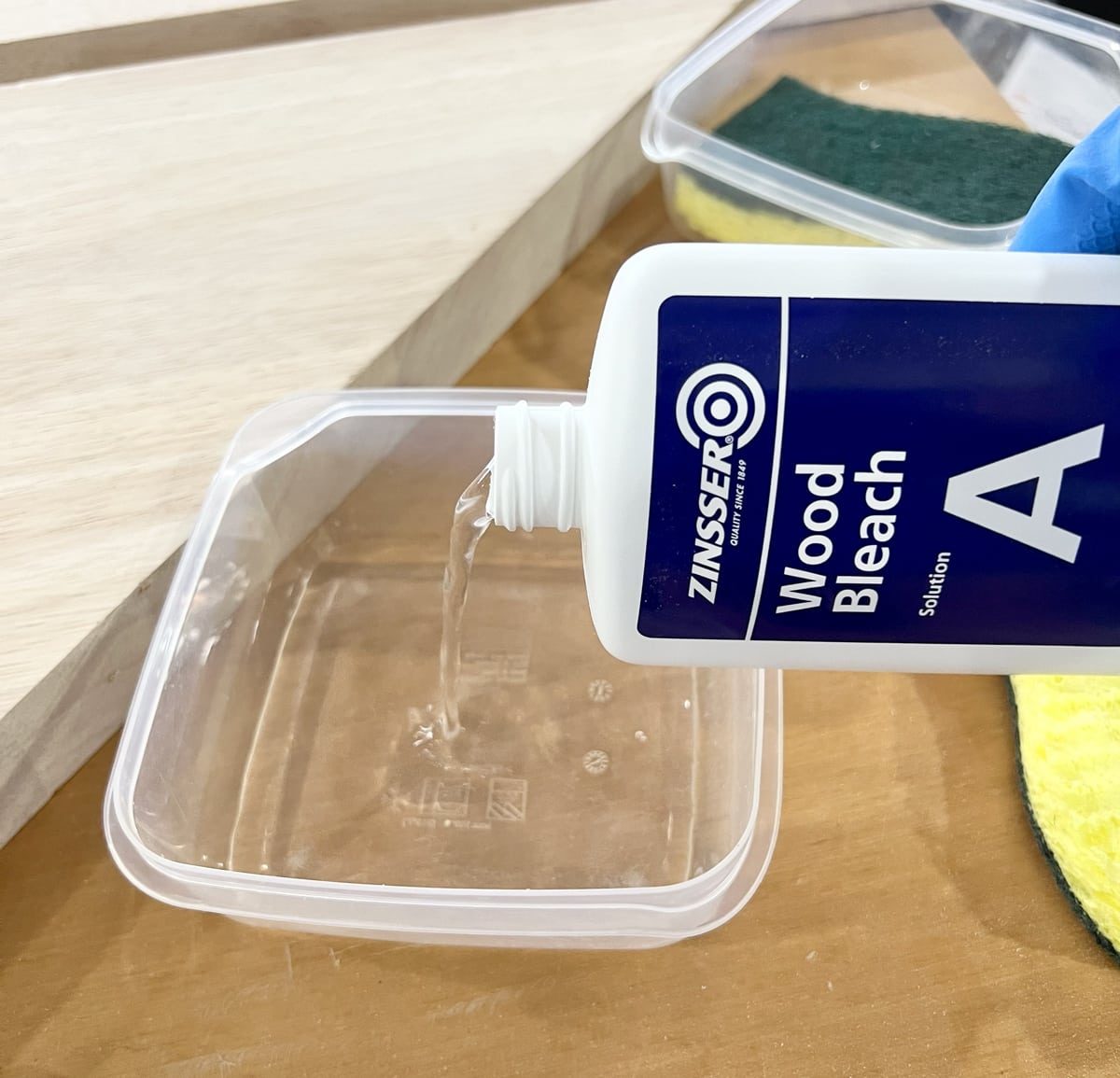
Then saturated the wood with a sponge (you can also use a brush, but I found the sponge to be easiest). Notice how vibrant the color is when the wood becomes wet!
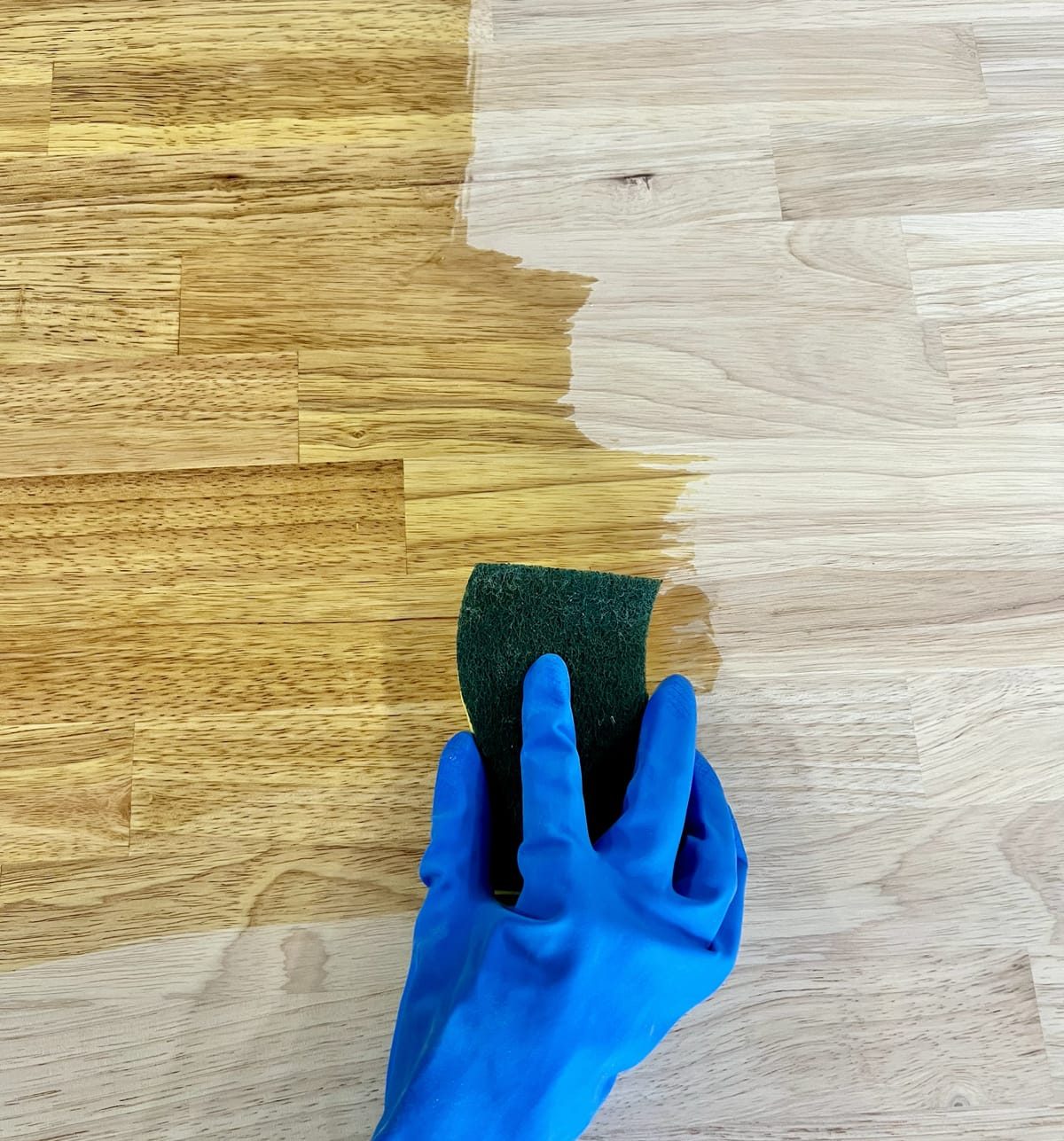
After letting solution A sit for 5 minutes, I followed up with a coat of solution B (using a new container and sponge).
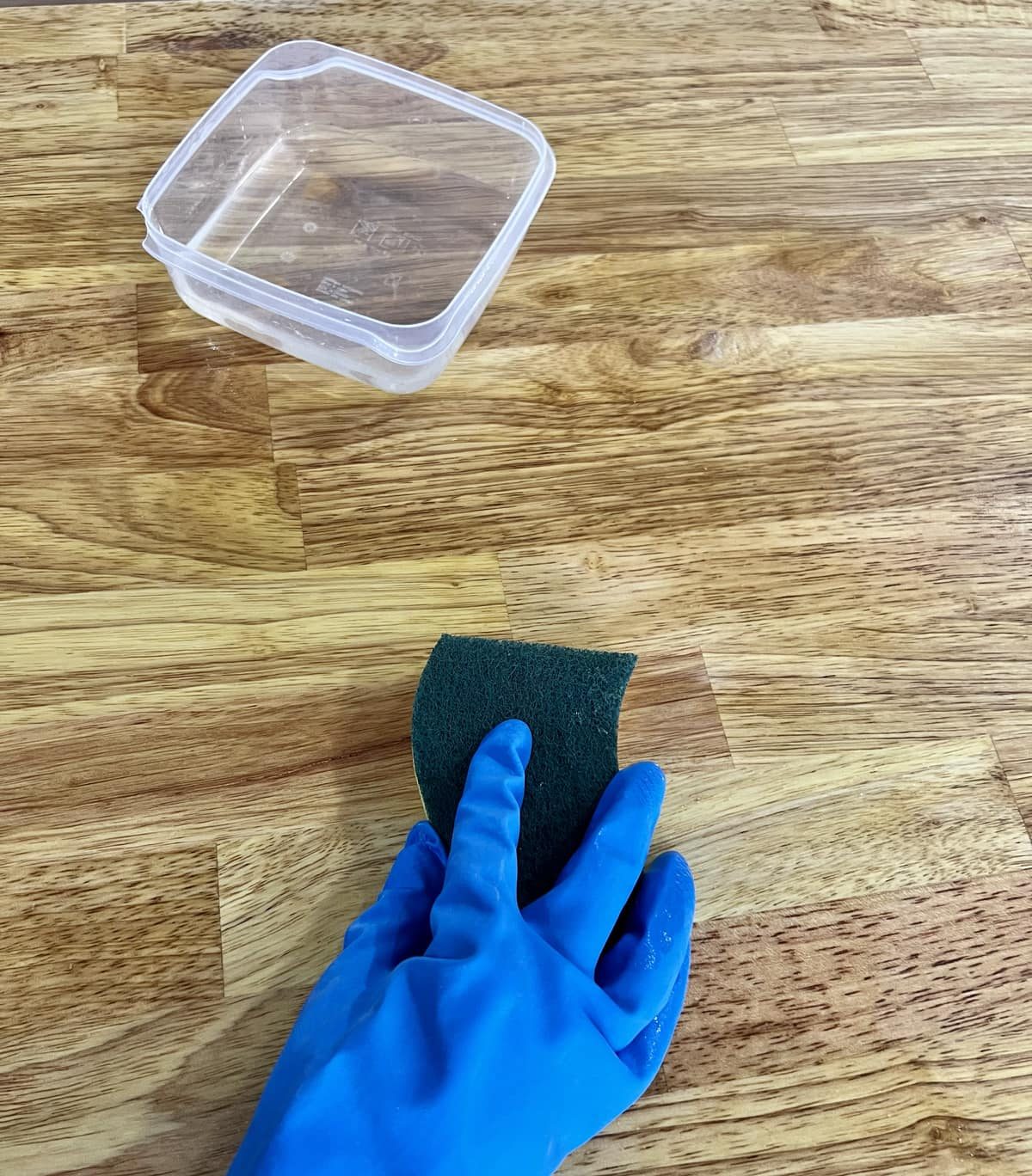
You will notice that it slowly begins to lighten in color almost immediately. It takes several hours to fully process.
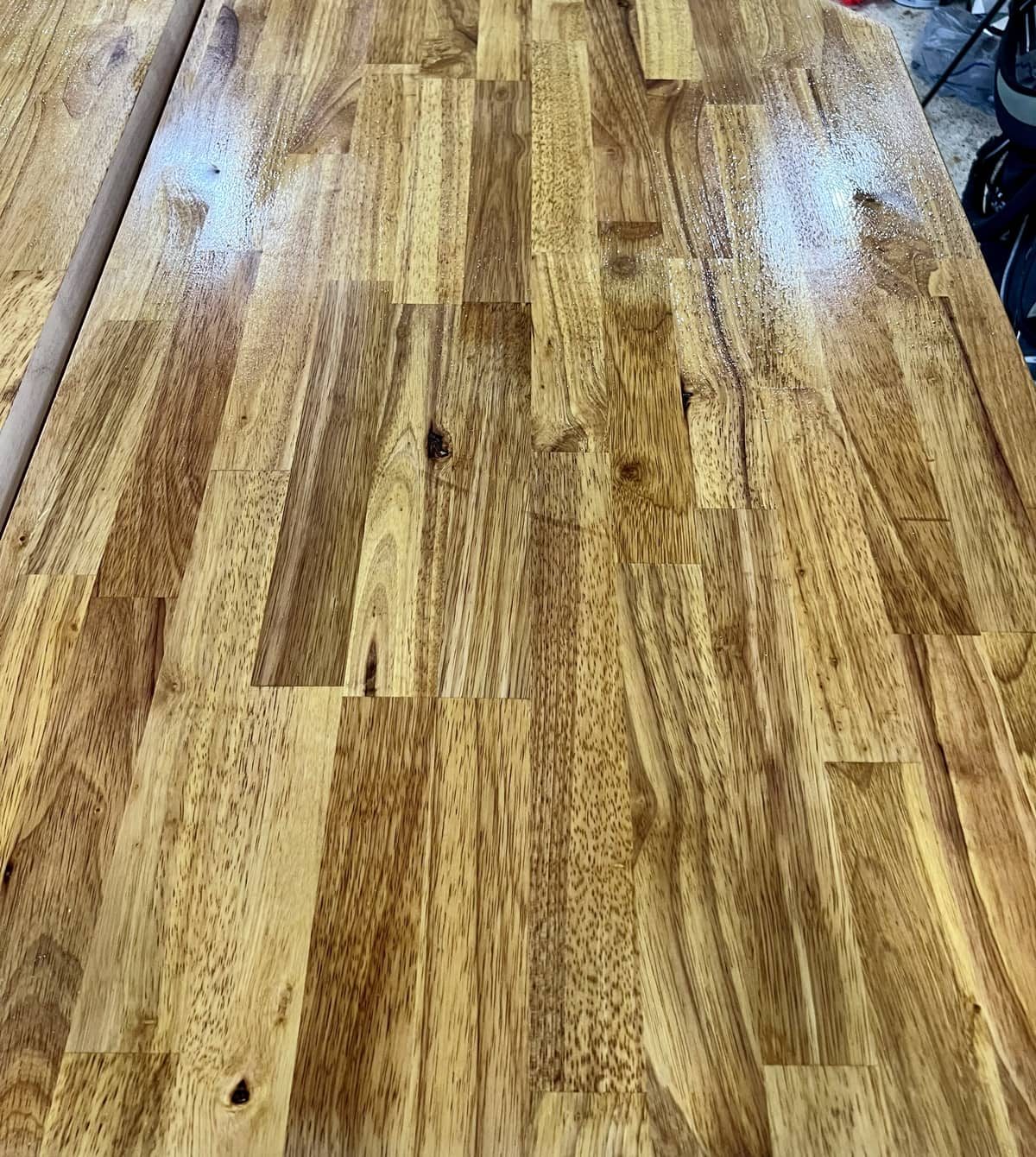
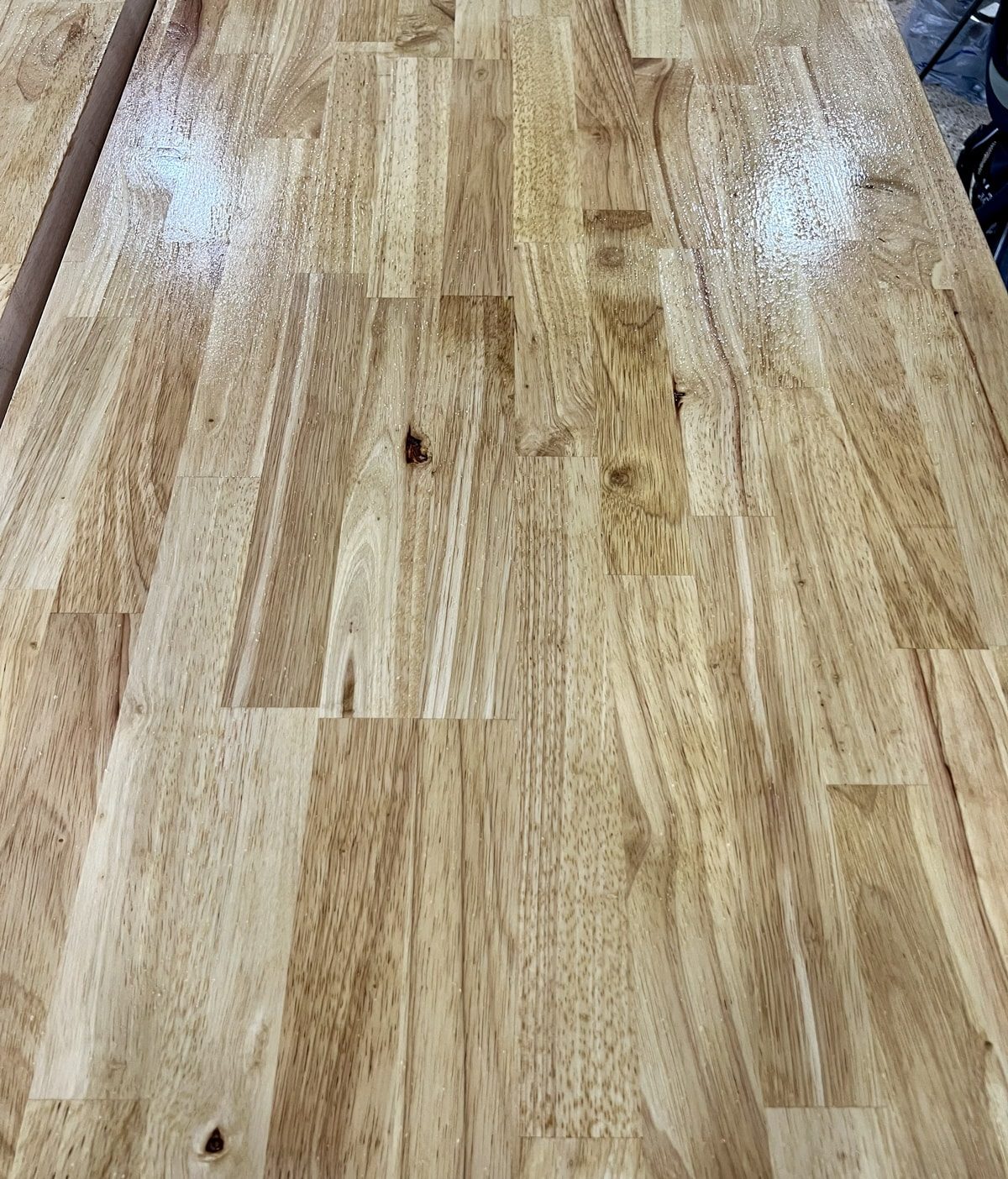
(left) a few minutes after applying Part A, (right) a few minutes after applying Part B.

Bleaching raises the grain of the wood, requiring a light sanding to smooth it out afterwards. And that is it! Here is the bleached butcher block next to the original (again, the difference is not huge untreated, but it is very noticeable once any stain/sealer is applied).
I finished the counters with a custom stain blend of Minwax Simply White and Special Walnut (~1:3 ratio) and love the way they turned out. No trace of orange and much less color variation than traditional butcher block.

Wood Bleaching Q&A
Can I bleach stained wood?
Wood bleach is designed for use on bare wood. Any stain, sealer, oil or wax must be stripped/ sanded off first.
How long does it take to bleach wood?
After both parts are applied, you will notice the wood start to lighten almost immediately. It is recommended to dry overnight, though the final color is typically reached after a few hours. You can repeat the bleaching process as many times as needed to achieve your desired look.
Is wood bleach toxic?
Two-part wood bleach contains the chemicals sodium hydroxide and hydrogen peroxide. Gloves and eye protection should be worn to prevent skin or eye contact. The solution is odorless, and can be used indoors safely.
Can I use household bleach to lighten wood?
Chlorine bleach can remove stains or dyes from wood, but it will not alter the wood's natural pigment. It can be effective at lightening the appearance of some species of wood (especially when combined with sunlight) but it will not truly remove the color.
Does oxalic acid bleach wood?
Oxalic acid is a cleaning agent used to remove iron and rust stains. Like chlorine bleach, oxalic acid may be able to lighten certain species of wood, but it will not remove the natural coloring.
What's the best wood bleach?
Wood bleach is very cost effective and easy to find these days. Zinsser makes the most widely used and inexpensive wood bleach. I order mine here on Amazonfor under $12.
I hope this post was helpful! It was certainly eye opening for me, and you can bet wood bleach will be a regular part of our woodworking projects from now on. Have you ever used wood bleach, or any other method to lighten wood? Any other tips or tricks to share? Let me know in the comments!